
Native American code talkers turned their languages into some of the most effective military communications systems of the 20th century. From field radios and handwritten codebooks to uniforms, medals, and memorials, these surviving objects and photographs reveal how their work moved from closely guarded wartime service into public memory.
The first 29 Navajo recruits take their oath

The Marine Corps’ first group of 29 Navajo recruits was sworn in at Fort Wingate, New Mexico, in May 1942. These men would help create the original Navajo military code, turning familiar words and concepts into a secure system for battlefield communication.
Preston and Frank Toledo work a field radio

Cousins Preston Toledo and Frank Toledo were photographed in the South Pacific relaying orders over a field radio in Navajo. The 1943 image captures the code talkers doing exactly what made their service so valuable: transmitting military information quickly through spoken language.
Henry Bake and George Kirk serve with a signal unit

Henry Bake and George Kirk were photographed while serving with a Marine signal unit during World War II. Code talkers needed more than fluency in Navajo; they also trained in military communications procedures and radio operation.
A code talker communicates from Tarawa

This wartime photograph places a Navajo code talker on Tarawa in November 1943. Radios made it possible to move information rapidly across the battlefield, while the Navajo system helped keep those spoken messages secure.
Leslie Hemstreet on Okinawa

Private Leslie Hemstreet of Crystal, New Mexico, was photographed on Okinawa during the final year of World War II. By that stage of the Pacific campaign, Navajo code talkers had become an established part of Marine communications.
A portable radio carried the code into combat

Code talking depended on ordinary military communications equipment as much as it depended on language. Portable radios allowed Navajo Marines to relay tactical messages from positions where speed, mobility, and secrecy all mattered.
Dan Akee represents the veterans behind the code

World War II veteran Dan Akee was photographed decades after his military service during a Native American Heritage Month event. Portraits of surviving code talkers became especially important because the program remained classified for years after the war.
The CRI 43007 radio survives in a museum

The CRI 43007 transmitter-receiver is one of the physical artifacts associated with Navajo code talking. Preserved at the National Cryptologic Museum, the rugged radio is a reminder that the famous spoken code traveled through very real and very heavy communications equipment.
Code talkers eventually told their own story

For decades, many Americans knew little about the work Native code talkers had performed during the world wars. Later public appearances, talks, and educational programs gave veterans and Native communities a chance to explain the history in their own words.
A museum display preserves the communications hardware

Museum displays place the code talkers’ radios alongside the broader history of American military cryptography. The equipment may look conventional, but the spoken information passing through it relied on Native languages that enemy listeners could not easily understand.
Comanche code talkers served with the 4th Signal Company

Navajo Marines were not the only Native servicemen who used their languages for military communication. Comanche soldiers served as code talkers with the U.S. Army, including members of the 4th Signal Company during World War II.
A surviving Comanche codebook

The Comanche codebook preserved at the National Cryptologic Museum gives physical form to a system that was designed to be spoken and memorized. Comanche speakers developed special terms for modern military equipment and concepts that had no direct traditional equivalent.
A Navajo Code Talker uniform survives

This surviving uniform is identified as part of the official Marine Corps clothing worn by a Navajo Code Talker during World War II. Objects like uniforms turn the story from an abstract tale of cryptography into the personal history of servicemen who wore them.
The 1942 memo that helped launch the program

On March 6, 1942, Major General Clayton B. Vogel sent a memorandum recommending the enlistment of Navajo speakers after a successful communications demonstration. The document is an unusually direct paper trail for the beginning of what became the Marine Corps’ Navajo Code Talker program.
A Choctaw medal preserves an earlier legacy

Choctaw soldiers used their language for military communications during World War I, years before the better-known Navajo program of World War II. This Choctaw Nation Medal of Valor, photographed at the National Cryptologic Museum, represents that earlier chapter of code talking history.
A museum display keeps the Navajo story visible

This Navajo Code Talkers display at Navajo National Monument brings wartime photographs and historical material together in one public exhibit. Displays like this helped move the story from classified military history into museums, classrooms, and community memory.
The Choctaw telephone squad before the Navajo code
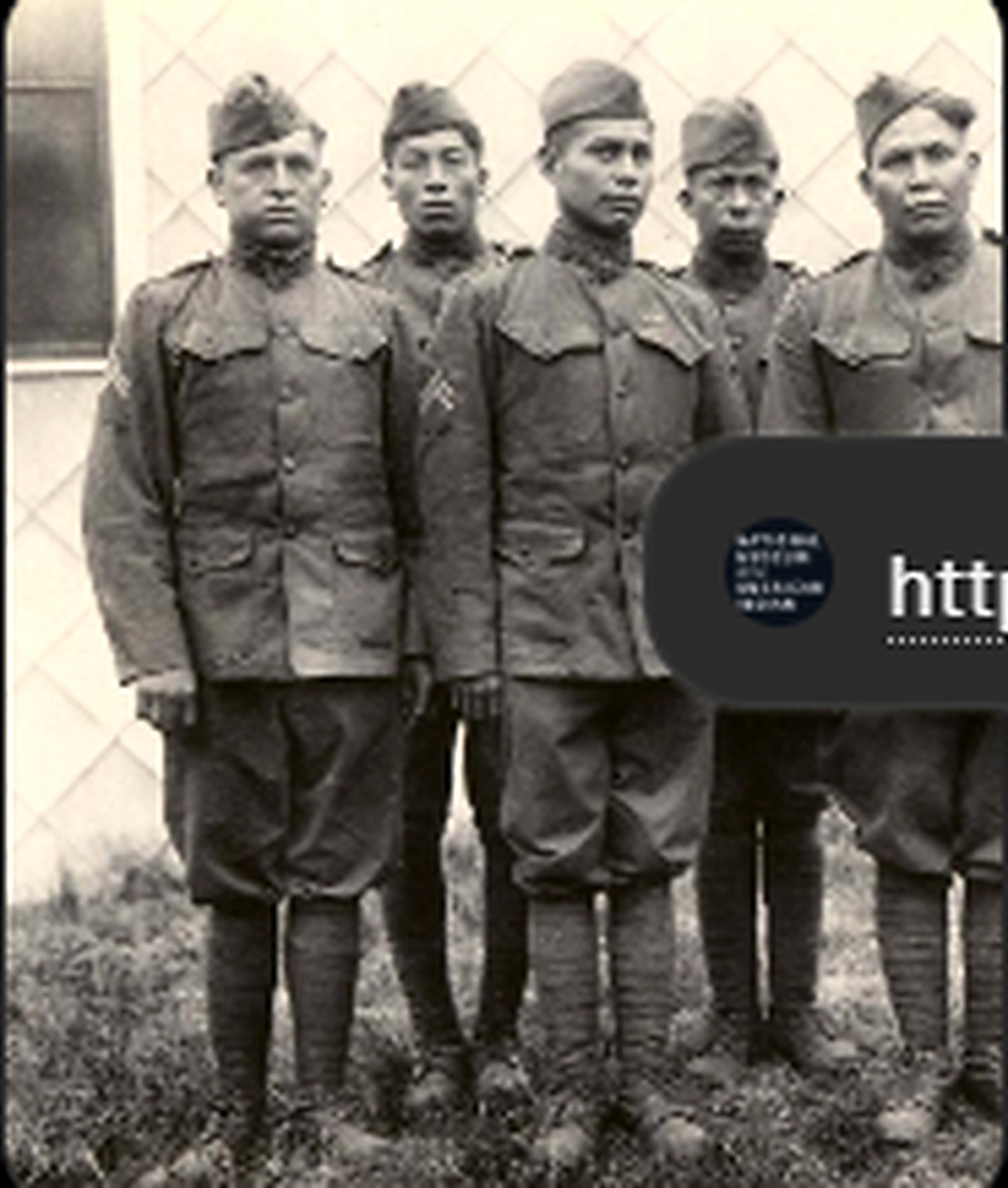
In 1918, Choctaw soldiers serving in France helped the Army protect battlefield messages by speaking their own language over military telephone lines. Their work came more than two decades before the Navajo code talkers became famous. A surviving group portrait shows that the story of Native military communications began with real servicemen, not with a medal created long afterward.
Charles Chibitty helped build the Comanche code
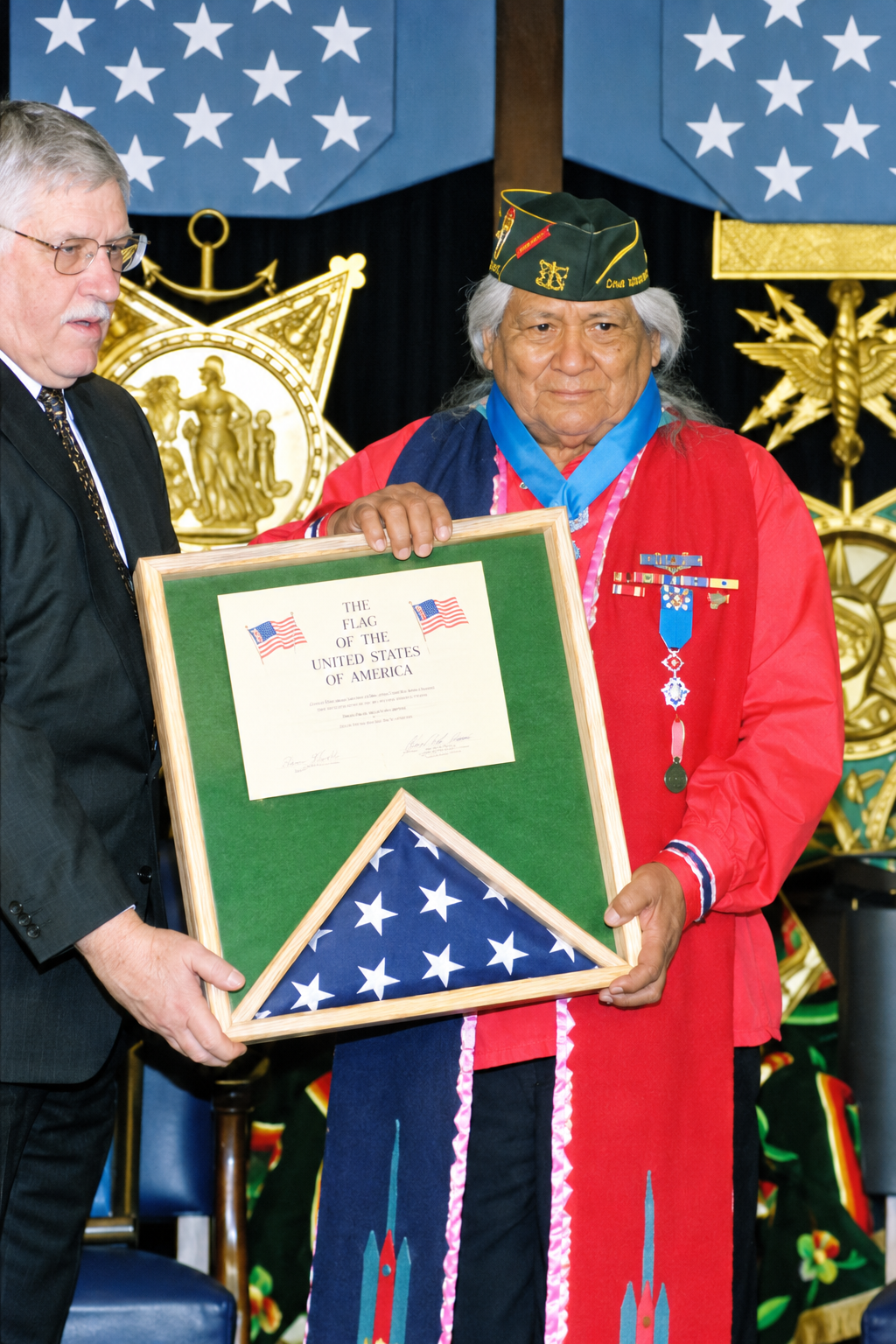
Charles Chibitty volunteered for the Army after learning that fluent Comanche speakers were being recruited for a special assignment. He helped develop the Comanche code and served in Europe, including during the Normandy campaign. His story puts a face to the decisions and dangers hidden behind a brief description of Congressional recognition.
Comanche code talkers train at Fort Benning
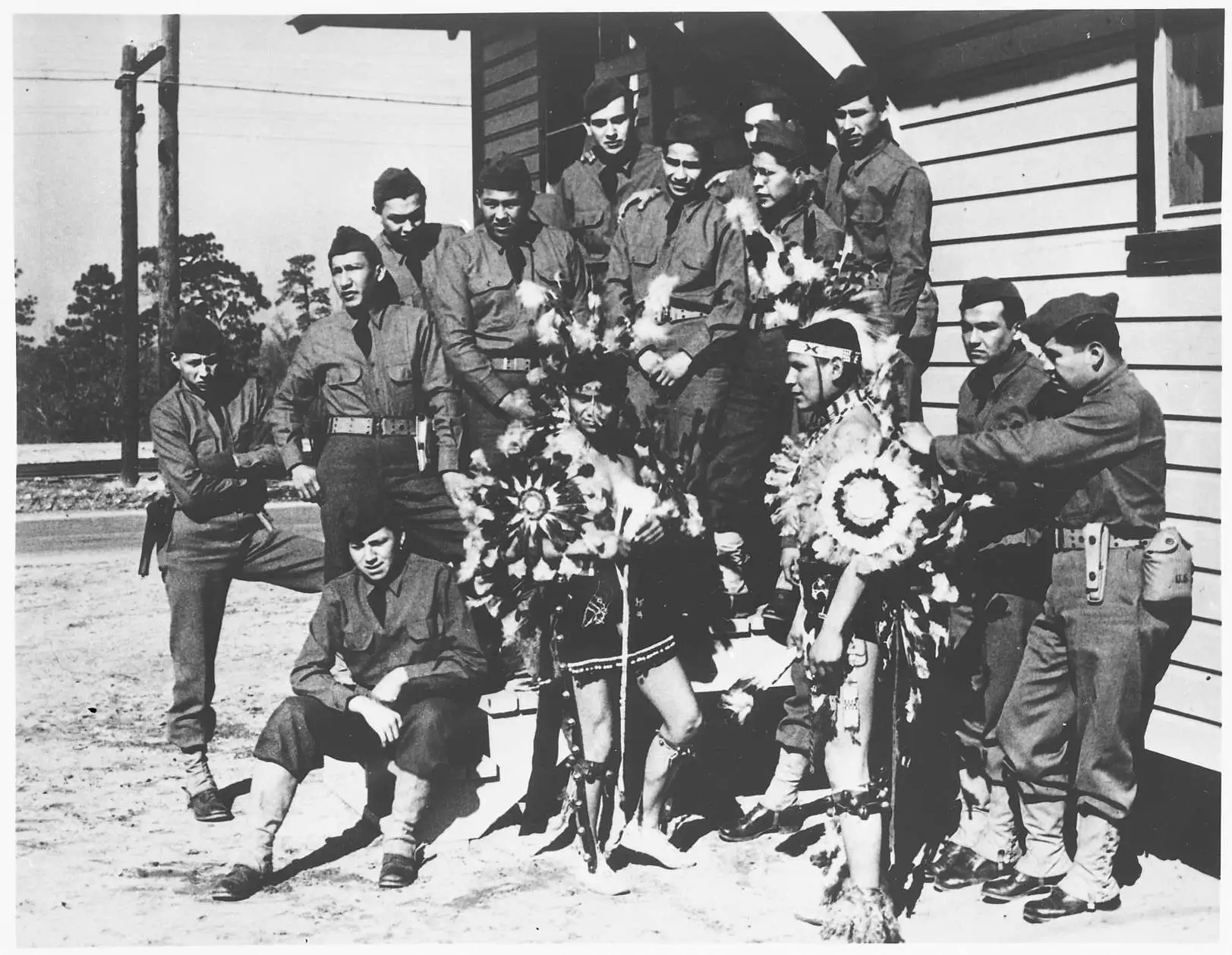
Years before the Normandy landings, Comanche soldiers trained together at Fort Benning, Georgia. Their military work combined familiarity with their own language and intensive communications preparation. A group photograph provides a much clearer sense of these soldiers as a unit than another close-up of a commemorative medal.
The Navajo code course had a daily schedule
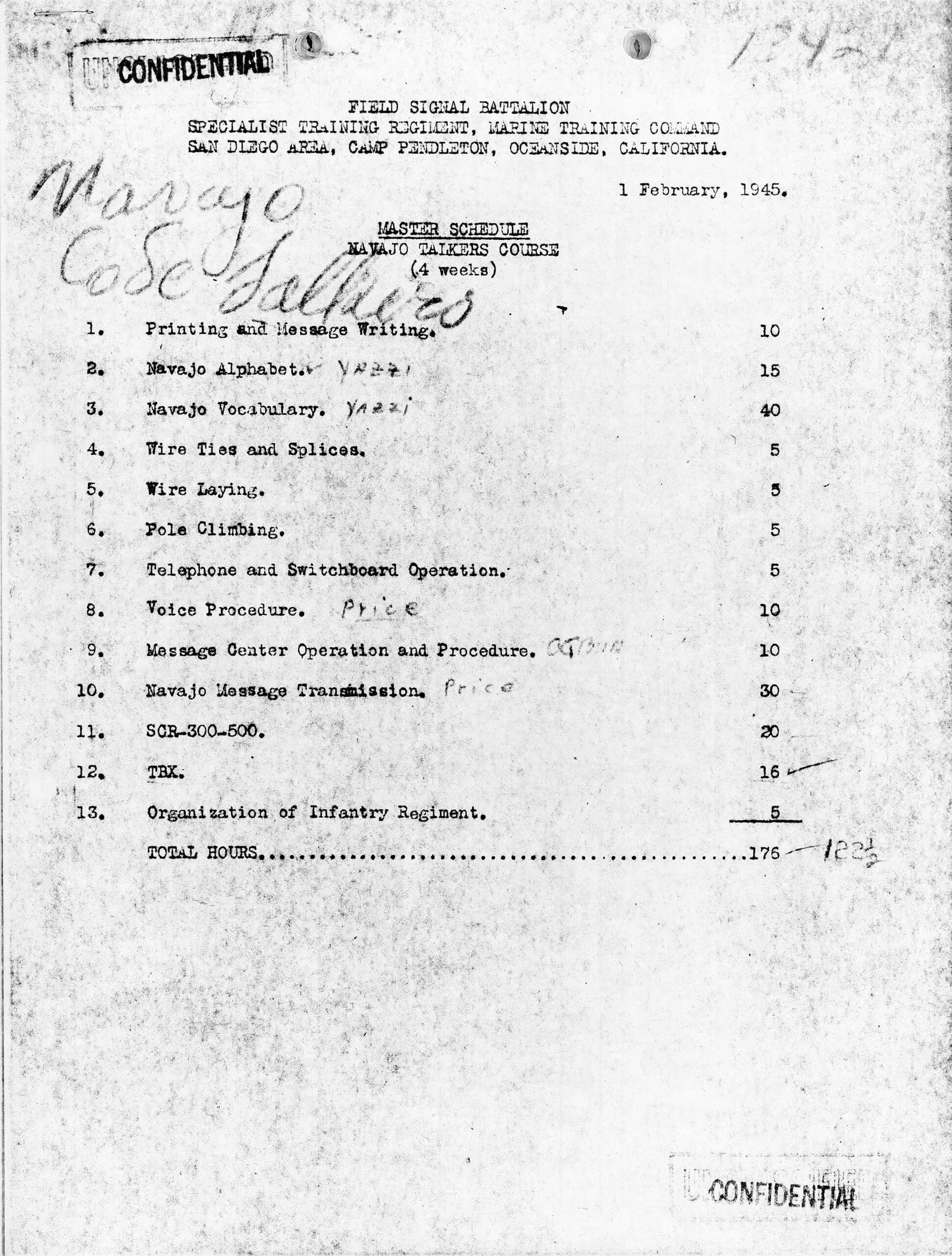
The Navajo code was not something Marines could learn merely by memorizing a few translated words. Training required organized instruction in communications skills and the code itself. A surviving February 1945 course schedule offers a rare paper record of how that secret work was taught.
An alphabet chart reveals how Navajo code worked
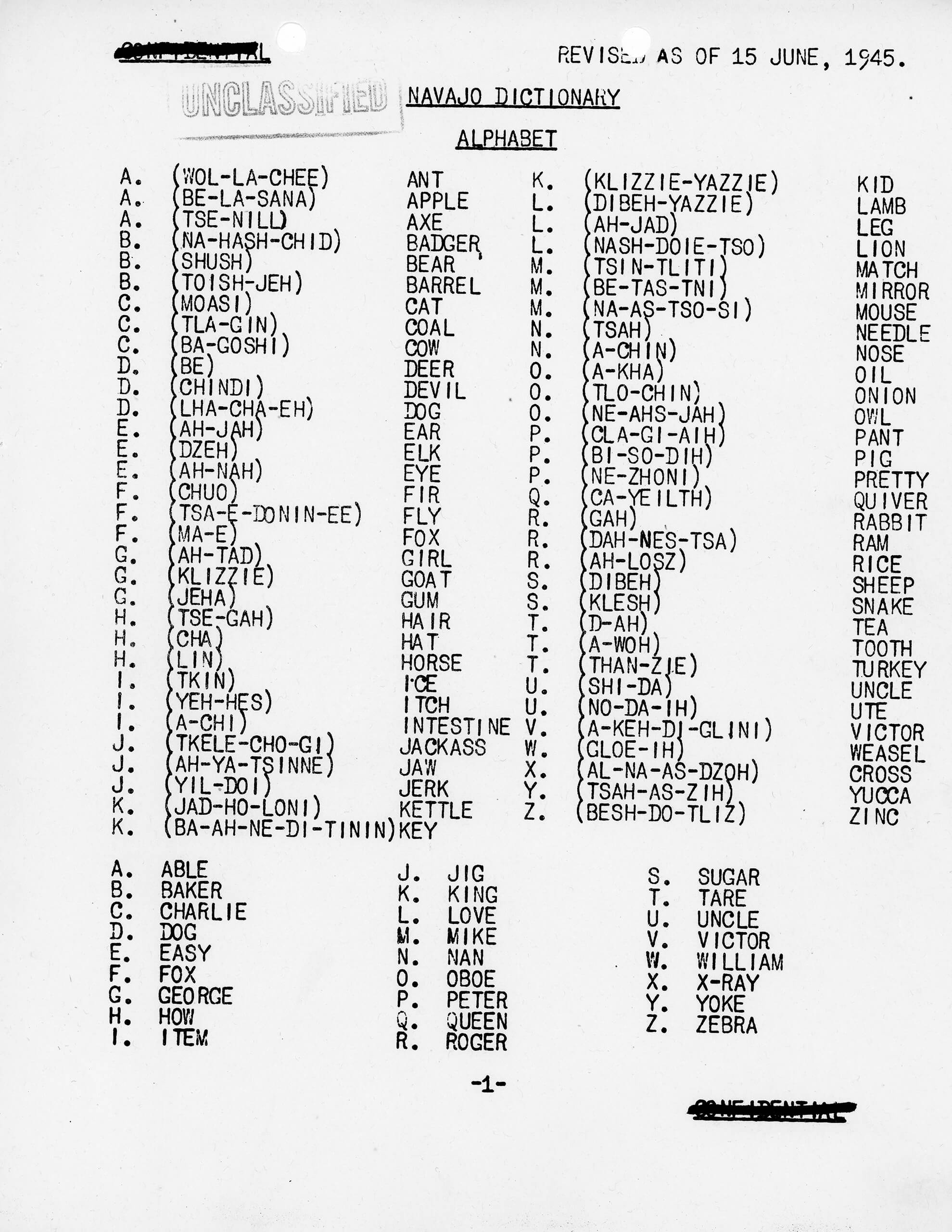
The original Navajo developers created code words to stand in for letters of the English alphabet. Many were based on familiar animals and other concepts, making the system easier to memorize while keeping its meaning obscure to outsiders. A surviving alphabet chart shows the ingenuity behind messages that could be transmitted verbally in the field.
Three Navajo Marines train at Camp Pendleton
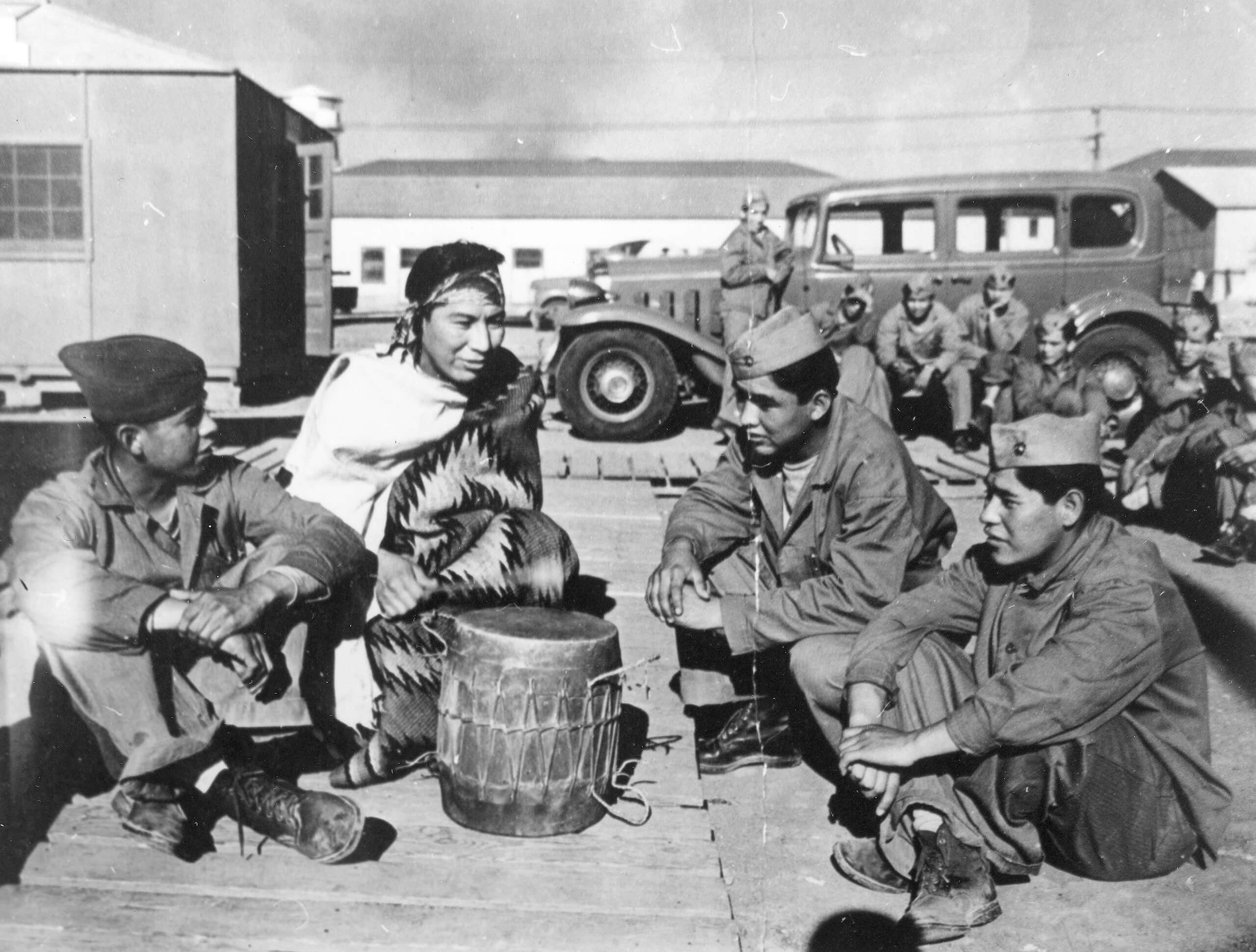
Henry Bahe Jr., Jimmie King, and Ray Dale appear together in a wartime photograph from Camp Pendleton. The image captures the people undergoing the preparation that made secure communications possible in combat. It also reminds us that the code belonged to a group of trained service members, not to a machine or a written cipher alone.
Hopi code talker Franklin Shupla speaks for himself
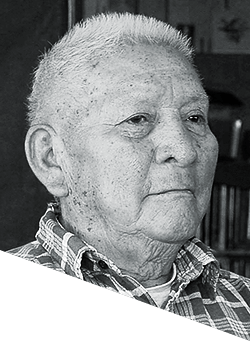
Not every Native code talker volunteered for military service. Hopi veteran Franklin Shupla recalled that he had been drafted, complicating any simple account of wartime enthusiasm. His testimony is a reminder that code talkers came from different nations and entered the armed forces under different circumstances.
Meskwaki code talkers prepared for war in 1941
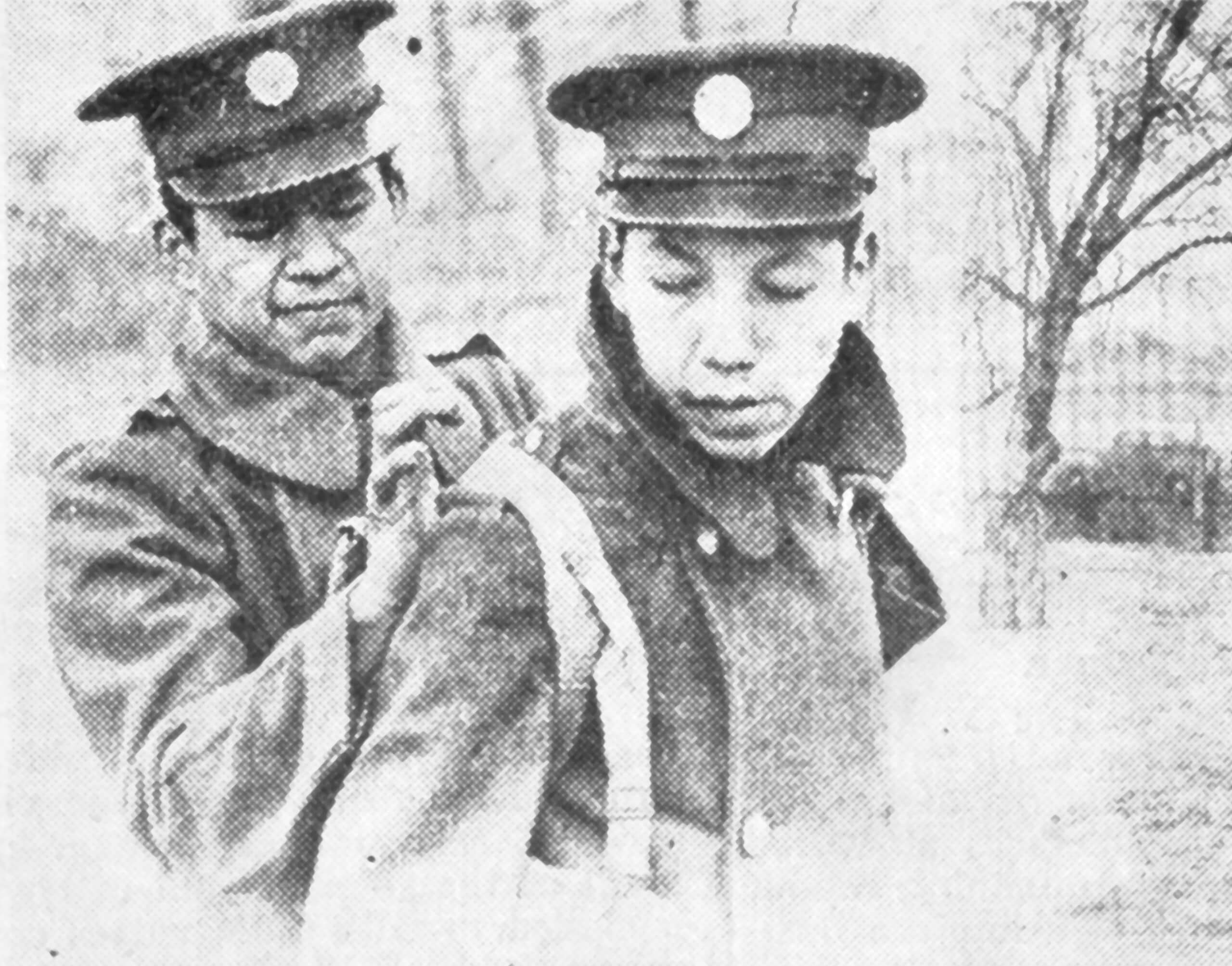
The Navajo Marines were far from the only Native-language communications specialists of World War II. Meskwaki men were among the groups whose languages helped protect military messages, and Meskwaki code talkers served in North Africa. Their 1941 photograph expands the story beyond the familiar Pacific island campaign.
Floyd Dann and the wartime radio
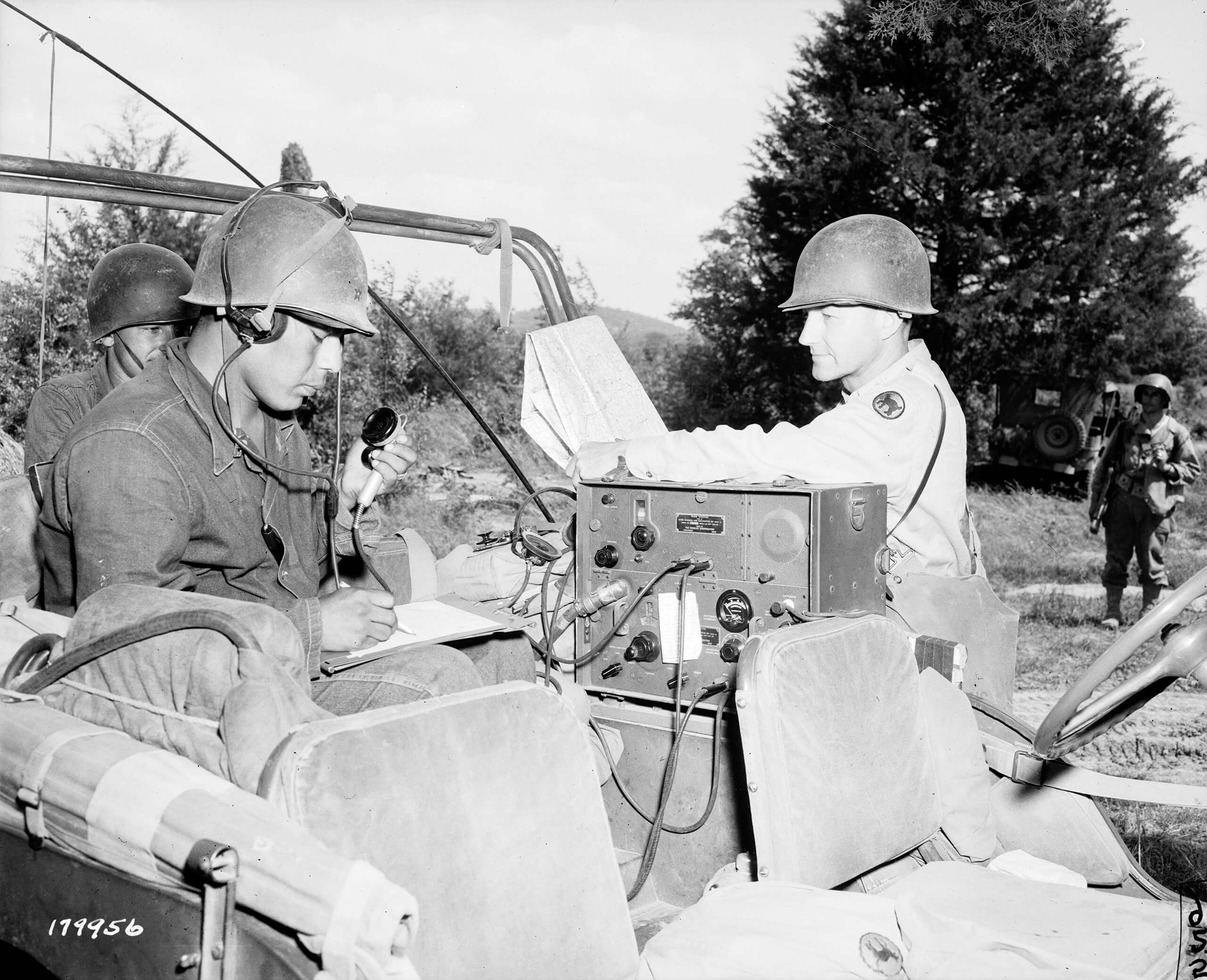
A 1943 portrait of radio operator Floyd Dann puts the technical side of wartime communications back in view. Military messages depended on operators who could work with specialized equipment under difficult conditions. The photograph gives readers an identifiable individual rather than another interchangeable depiction of an award.
Carl Gorman served on Saipan
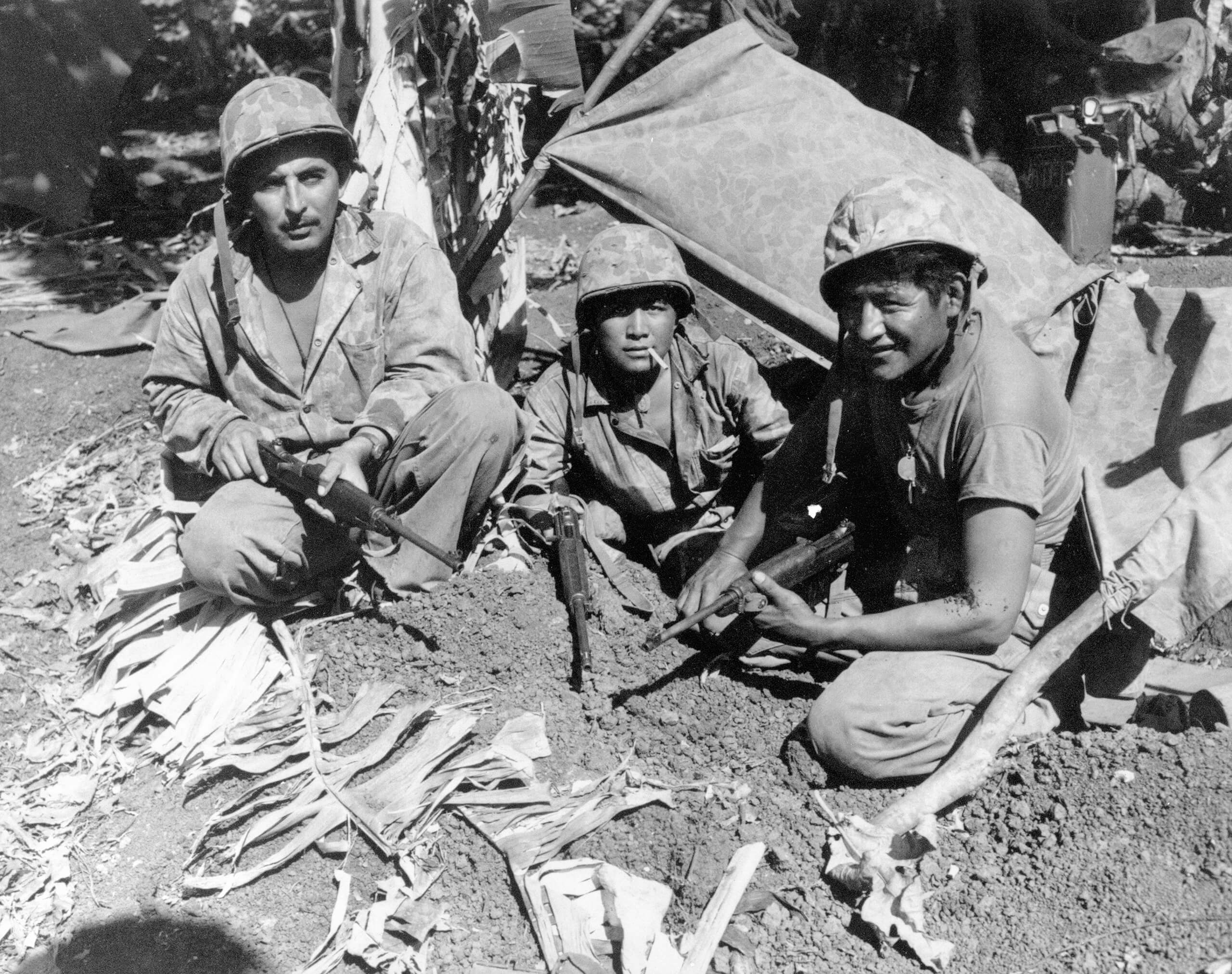
Carl Gorman belonged to the original group of 29 Navajo Marines who developed the code in 1942. His service took him through several major Pacific battles, and serious illness and combat stress eventually forced his evacuation. A photograph from Saipan connects the celebrated code to the difficult experiences of one of its creators.
The Navajo code talkers who landed on Saipan
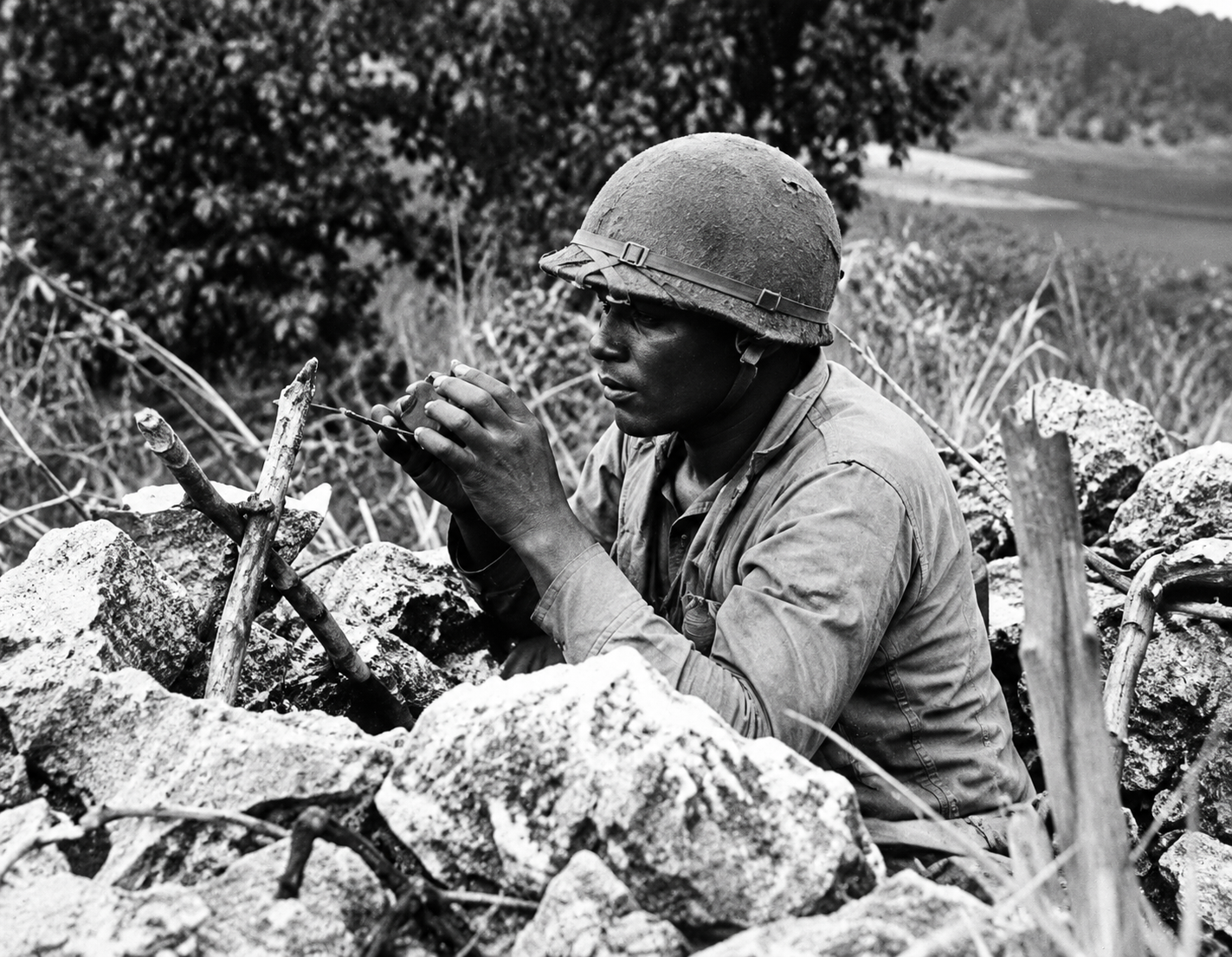
Navajo code talkers were present during the 1944 fighting for Saipan, where coordination between units mattered enormously. A photograph of men who landed on the island offers a direct visual link to their wartime service. Unlike a later medal, it shows the participants during the conflict that made their work historic.
A monument turns military history into public memory

The Code Talkers Monument in Ocala, Florida, moves the story outside archives and museums and into a public memorial space. Monuments like this reflect how recognition of Native code talkers expanded long after the wars in which they served.
Window Rock honors the Navajo Code Talkers

A Navajo Code Talker statue at Window Rock gives the story a permanent place within the Navajo Nation itself. The memorial centers the serviceman and his communications equipment, connecting military history directly to the community whose language made the code possible.
Doug Hyde’s tribute brings the story into the present

Artist Doug Hyde’s Navajo Code Talker Tribute in Phoenix transforms the history into a large public work of art. It closes the circle from secret wartime communication to open commemoration, showing how a classified mission eventually became a celebrated part of American and Native history.