
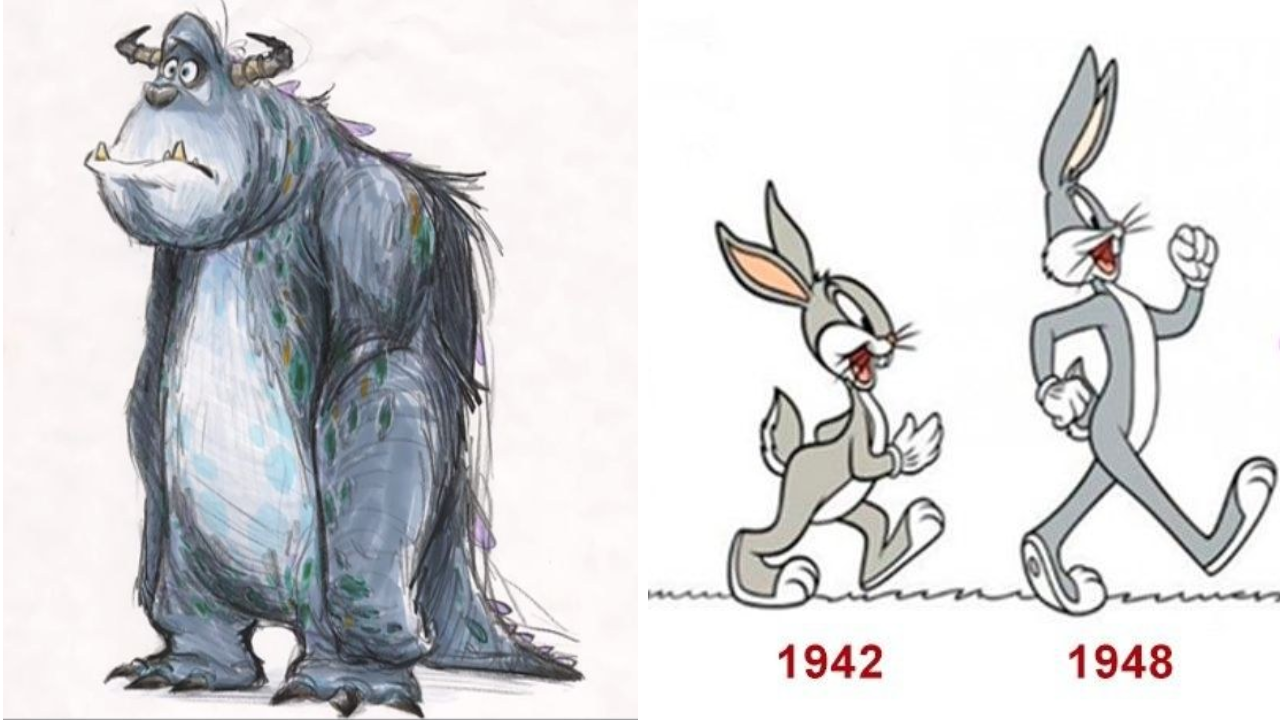
Cartoon stars, puppets and ad mascots rarely look the same as the day they were born. These 30 famous characters went through big makeovers, and their original designs might surprise you.
Ronald McDonald – McDonald’s

The first Ronald McDonald was played by Willard Scott in 1963 TV ads in Washington, D.C. He wore a paper cup on his nose and a food tray on his head.
Betty Boop – Dizzy Dishes

When Betty Boop first appeared in the 1930 cartoon “Dizzy Dishes,” she was drawn with floppy dog ears. Within two years, the ears turned into hoop earrings and she became fully human.
Popeye – Thimble Theatre

Popeye first showed up in E.C. Segar’s comic strip “Thimble Theatre” in 1929 as a minor character hired to sail a ship. Readers loved him so much that he soon took over the strip.
Donald Duck – The Wise Little Hen

Donald made his debut in the 1934 cartoon “The Wise Little Hen.” His early design had a long bill and a plumper body than the duck fans know today.
Goofy – Mickey’s Revue

Goofy began as Dippy Dawg, an old character with a white beard who laughed from the crowd in the 1932 cartoon “Mickey’s Revue.” Within a few years, he became the younger, lovable Goofy.
Tom – Puss Gets the Boot

In the 1940 cartoon “Puss Gets the Boot,” the cat who chased Jerry was named Jasper. He had a more realistic look, with thick, scruffy fur and a long body, before becoming the Tom of later years.
Woody Woodpecker – Knock Knock

Woody first appeared in the 1940 cartoon “Knock Knock.” The original bird had a wilder look, with a bigger beak and goofier eyes than the cleaned-up version of later years.
Charlie Brown – Peanuts

The very first “Peanuts” strip ran on October 2, 1950. Charlie Brown had a rounder head and wore a plain shirt, since his famous zigzag shirt had not arrived yet.
Snoopy – Peanuts

In the early 1950s, Snoopy walked on all fours and looked like an ordinary puppy. Over the years, he began standing on two legs and turned into the beagle with a big imagination.
Kermit the Frog – Sam and Friends

Jim Henson made the first Kermit from his mother’s old coat and a ping-pong ball cut in half for eyes. On “Sam and Friends” in 1955, Kermit looked more like a lizard and had no pointed collar.
Scooby-Doo – Scooby-Doo, Where Are You!

Designer Iwao Takamoto learned what makes a prize-winning Great Dane and then gave Scooby the opposite traits, like a sloping back and bowed legs. This early model sheet shows him for the 1969 series.
Oscar the Grouch – Sesame Street

During the first season of “Sesame Street” in 1969, Oscar was orange. He turned green in the second season, and the show later explained that he changed color after a trip to Mushy Muddy Swamp.
Big Bird – Sesame Street

In the show’s earliest days, Big Bird looked scruffier and acted like a goofy, slow-witted adult. Soon he was changed into a curious 6-year-old, and his feathers got neater.
Garfield – Garfield

The first Garfield strip ran on June 19, 1978. In early strips like this one, Garfield was heavier, with smaller eyes and a wider face than the cat fans know today.
Mario – Donkey Kong

Mario was first called Jumpman in the 1981 arcade game “Donkey Kong,” where he worked as a carpenter. His big nose, mustache and overalls were chosen partly because they were easier to show with so few pixels.
Sonic the Hedgehog – Sonic the Hedgehog

Before his 1991 debut, Sega’s designers sketched many versions of Sonic. These early drawings show the blue hedgehog taking shape, with his spiky quills and big sneakers.
Woody – Toy Story

In early Pixar sketches, Woody looked like a ventriloquist’s dummy and had a much meaner personality. Over time, he became the friendly cowboy doll who leads Andy’s toys.
Buzz Lightyear – Toy Story

Buzz was first called Lunar Larry, then Tempus and Morph during the early days of “Toy Story.” One version wore a red space suit, as in this sketch, before Pixar settled on white, green and purple.
Sulley – Monsters, Inc.

Early sketches showed Sulley as a much scarier, hairier beast with long horns. Pixar later softened him into the big, lovable blue monster with purple spots.
Shrek – Shrek

Early sketches of Shrek showed a lumpier, odder-looking ogre. The character came from William Steig’s 1990 picture book, and his look changed many times before the 2001 movie.
Mr. Peanut – Planters

A Virginia schoolboy named Antonio Gentile sketched the first Mr. Peanut in a 1916 contest. A commercial artist then added the monocle, top hat and cane, and the mascot kept changing over the decades.
Michelin Man – Michelin

The Michelin Man, known as Bibendum, was born in 1898. Early ads showed him built from stacks of white tires and wearing a pince-nez, as in this old American poster.
Morton Salt Girl – Morton Salt

The girl with the umbrella first appeared in Morton Salt ads in 1914 with the slogan “When it rains, it pours.” Her hairstyle and dress were updated several times, as this lineup shows.
Elsie the Cow – Borden

Borden introduced Elsie the Cow in the 1930s. Early magazine ads like this one showed her as a cartoon cow with a family of her own, including her husband, Elmer. She went on to become one of the country’s best-known mascots.
Jolly Green Giant – Green Giant

The first Green Giant from 1928 was a frowning, hunched figure wrapped in an animal skin. Over the years, he grew taller, greener and much friendlier, as this lineup shows.
Tony the Tiger – Frosted Flakes

Tony debuted in 1952 on boxes of Kellogg’s Sugar Frosted Flakes. He was first drawn with an oval head and walked on four legs, then later stood upright and grew more muscular.
Smokey Bear – U.S. Forest Service

Smokey Bear first appeared on fire prevention posters in 1944. Early posters like this one showed him in a more realistic style than the friendly ranger of later years.
Pillsbury Doughboy – Pillsbury

The Pillsbury Doughboy, officially named Poppin’ Fresh, first appeared in 1965. Early ads like this one introduced the giggling little mascot to American kitchens.
Bugs Bunny – Porky’s Hare Hunt

A wacky rabbit appeared in the 1938 cartoon “Porky’s Hare Hunt,” and the character became the Bugs Bunny we know in 1940’s “A Wild Hare.” This lineup shows how his look changed over the years.
Mickey Mouse – Steamboat Willie

Mickey’s first released cartoon, “Steamboat Willie,” debuted in 1928. Back then, he had solid black eyes, a long pointed nose, skinny limbs and no gloves, as this famous scene at the ship’s wheel shows.












