Some of them collapsed mid-song. Some fell from impossible heights. Some were taken by weapons that should never have been loaded. What connects all of them is that their final moments were spent in front of an audience, doing the thing that had defined their lives. These thirty stories are not easy to read. They are worth knowing.
Dimebag Darrell, 2004

The lead guitarist of Pantera, widely regarded as one of the most technically gifted metal guitarists of his generation, was shot multiple times on stage at the Alrosa Villa club in Columbus, Ohio, during the first song of Damageplan’s set. A gunman rushed the stage and opened fire. The head of security was also killed trying to stop the attack. Darrell was 38 years old. Eddie Van Halen requested that Darrell be buried with one of his guitars, and the request was honored.
Owen Hart, 1999

The WWF wrestler was being lowered from the rafters of the Kemper Arena in Kansas City on a harness for a pay-per-view entrance stunt when the release mechanism triggered prematurely, dropping him 78 feet. He landed chest-first on the ring ropes and died of internal bleeding from blunt force trauma. He was 34 years old. The event continued after his death, a decision that generated significant controversy. His widow Martha Hart spent years in litigation against the WWF over the circumstances of his death.
Steve Irwin, 2006

The Crocodile Hunter was filming an underwater documentary segment at Batt Reef near Port Douglas in Queensland when a short-tail stingray struck him in the chest with its barb, piercing his heart. He was 44 years old. The death was described by marine biologists as extraordinarily rare, as stingrays are not aggressive animals and fatalities from their barbs are extremely uncommon. Irwin had spent his entire life working with far more dangerous creatures than the one that killed him.
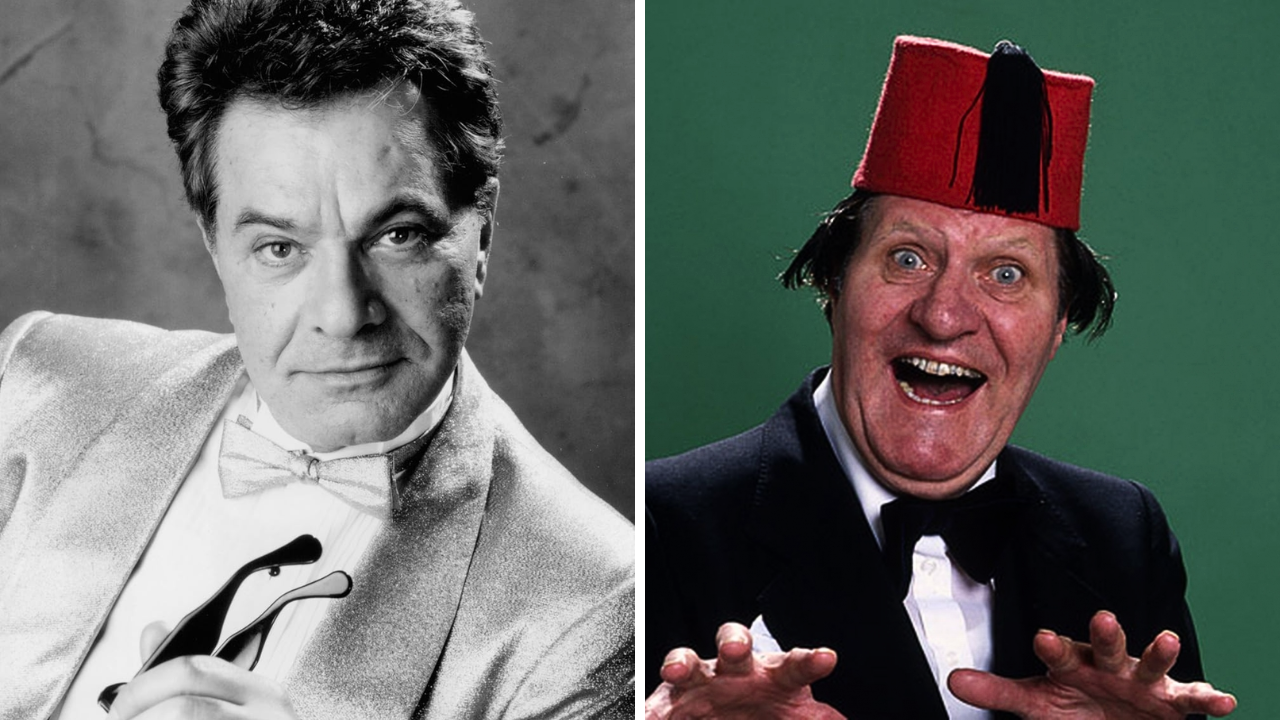
Tommy Cooper, 1984

The Welsh comedian and magician was performing his act live on ITV’s variety show Live from Her Majesty’s when he collapsed on stage in front of millions of television viewers. He was known for a style of comedy built around deliberately failing magic tricks, so the audience initially laughed. His assistant pulled a cloak over him, still believing it to be part of the act. He had suffered a massive heart attack and was already dead. He was 63 years old.
Karl Wallenda, 1978

The patriarch of the Great Wallendas, a family circus act famous for high-wire performances without a safety net, attempted a tightrope walk between two ten-story hotel towers in San Juan, Puerto Rico, at the age of 73. Winds gusting to 30 miles per hour destabilized the wire, and Wallenda fell to his death. He had spent nearly seven decades performing without a net at heights that would have deterred most people from considering the profession. He reportedly said that life is on the wire and everything else is just waiting.
Johnny Ace, 1954

The rhythm-and-blues singer was backstage at the City Auditorium in Houston, Texas, on Christmas Day, playing with a revolver during a break between sets. He pointed it at himself and pulled the trigger, telling the people around him it was not loaded. He was 25 years old. His death was ruled accidental. The posthumous release of Pledging My Love became one of the biggest R&B hits of 1955, and the song remained in circulation for decades afterward. Paul Simon wrote a song about him in 1983.
Leonard Warren, 1960

One of the great baritones of the 20th century collapsed on stage at the Metropolitan Opera in New York City during a performance of Verdi’s La Forza del Destino. He had just completed the aria at the end of Act III when he fell. The house physician declared him dead 25 minutes later from a stroke. He was 48. The aria he had been singing contained the line “to die, a momentous thing.” The conductor was Rudolf Bing, who had the curtain lowered and announced to the audience what had happened.
Les Harvey, 1972

The Scottish guitarist and co-founder of Stone the Crows was performing at Swansea’s Top Rank venue in Wales when he simultaneously touched his guitar strings and an improperly grounded microphone. The electrocution killed him instantly. He was 27 years old. His brother Brian Harvey was the lead singer of the band. The incident prompted significant improvements in stage electrical safety standards in the United Kingdom. Harvey had previously been offered a position in The Animals but had declined.
Tiny Tim, 1996

The singer best known for his falsetto cover of Tiptoe Through the Tulips had suffered a heart attack at a ukulele festival in Massachusetts in September 1996 and was advised by doctors not to perform. He performed anyway, one month later, at a gala benefit in Minneapolis. He collapsed on stage during a performance of Tiptoe Through the Tulips, the song he was most famous for, and died shortly afterward at 64. He had been told specifically and clearly that performing could kill him.
Mark Sandman, 1999

The singer and bassist of Morphine collapsed on stage at an outdoor festival in Palestrina, Italy. He was 46 years old. A heart attack, aggravated by the heat of the venue and the physical demands of performing, killed him. Morphine had built a devoted following on the strength of Sandman’s bass-heavy, saxophone-driven sound and his deeply idiosyncratic approach to his instruments, which he frequently modified to produce tones that no standard instrument could achieve. The band had been due to record a new album that summer.
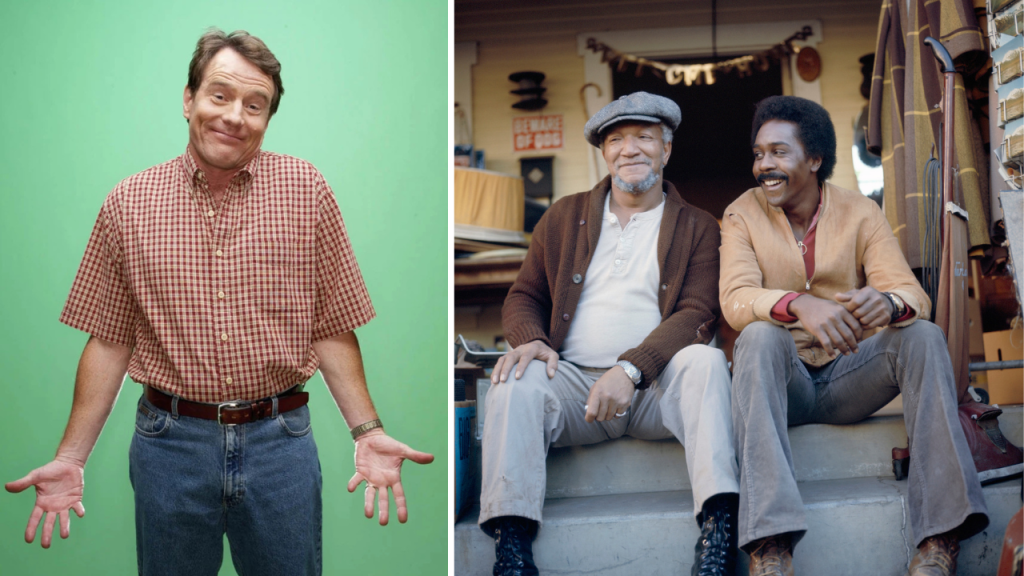
Redd Foxx, 1991

The comedian and actor, best known for playing Fred Sanford in the sitcom Sanford and Son, collapsed during rehearsals for his new series The Royal Family on the CBS lot in Hollywood. He was 68. His co-stars initially believed he was performing the fake heart attack that his Sanford character was famous for deploying whenever he wanted sympathy. By the time they understood what was actually happening, he was already dying. The heart attack was real and fatal.
William Ellsworth Robinson, 1918

The American magician performed under the stage name Chung Ling Soo, adopting the persona of a Chinese performer and building an act around elaborate illusions. One of his signature tricks was the bullet catch, in which a gun was apparently fired at him and he appeared to catch the bullet. The gun used in the trick had a mechanism designed to prevent the bullet from leaving the barrel. One night in 1918 in London, the mechanism failed. The bullet entered his lung and he died the following day.
Nick Menza, 2016

The drummer for Megadeth from 1989 to 1998, who recorded four studio albums with the band including Countdown to Extinction, collapsed three songs into a set with his jazz fusion project OHM in Studio City, California. He was 51 years old and died of congestive heart failure. He had survived multiple other near-catastrophes during his life, including a tumor diagnosis that ended his tenure with Megadeth and a power saw accident that nearly cost him an arm.
Irma Bule, 2016

The Indonesian pop singer regularly performed with live snakes as part of her stage show. During a performance at a private party in West Java, a king cobra she was handling bit her in the thigh after she accidentally stepped on it. She was offered anti-venom immediately by a handler in the wings but refused it and continued performing for another 45 minutes. The venom eventually caused convulsions and vomiting, and she died in hospital shortly after being taken offstage. She was 29 years old.
Mitsuharu Misawa, 2009

The Japanese professional wrestler and founder of Pro Wrestling NOAH had told an interviewer just four days before his death that he planned to retire within two years. During a tag team match in Hiroshima, his opponent delivered a back suplex that separated the upper cervical vertebrae of his spine. He was 46 years old and had been one of the most respected figures in Japanese professional wrestling for nearly three decades. The sport’s governing bodies introduced new restrictions on certain moves following his death.
Sib Hashian, 2017

The drummer who replaced Jim Masdea in Boston in 1975 and recorded on the band’s first two albums was performing as a guest drummer on a Legends of Rock cruise in the Caribbean when he collapsed on stage and could not be revived. He died of a heart attack at 67. His daughter Lauren had married Dwayne Johnson, who posted a tribute describing Hashian as his second father.
Sam Patch, 1829

The first American to gain national fame as a daredevil built his reputation by jumping from impressive heights into rivers and waterfalls. His jump from a 125-foot platform over Niagara Falls in October 1829 made him famous. The following month, on Friday the 13th, he attempted to jump into the Genesee River in Rochester, New York, before a large crowd. He either fell or jumped incorrectly, hitting the water at a fatal angle, and his body was not recovered until the following spring. He was approximately 30 years old.
Dick Shawn, 1987

The American comedian was performing a one-man show at the University of California San Diego when he delivered a monologue in the character of a politician speaking after a nuclear war. He delivered the line “I will not lie down for this” and then lay down on the stage. The audience waited. The laughter continued for several minutes before people began to understand that something was wrong. He had suffered a heart attack. His son was in the audience. Shawn was 63 years old.
Jerome “The Impostor” LeBlanc, 2012

The Canadian stuntman was performing a base jump from a hot air balloon at the Montreal Lachine air show when his parachute failed to open properly. He fell approximately 1,000 feet in front of thousands of spectators. He was 44 years old. LeBlanc had performed the stunt many times before, and witnesses described the crowd initially cheering as he jumped before the trajectory of his fall made clear that something had gone wrong.
Big Bopper, 1959

Jiles Perry Richardson Jr., known as the Big Bopper for his exuberant stage presence and booming voice, died in the same small plane crash on February 3, 1959, that killed Buddy Holly and Ritchie Valens. The Beechcraft Bonanza went down in a Iowa cornfield shortly after taking off from Mason City in freezing conditions. Richardson had taken Waylon Jennings’s seat on the flight, as Jennings had given it up after Richardson complained of illness. Jennings carried guilt about the decision for the rest of his life.
Ritchie Valens, 1959

The 17-year-old rock and roll pioneer whose La Bamba became one of the defining recordings of the era died in the same crash as Buddy Holly and the Big Bopper on what Don McLean famously called the day the music died. Valens had won his seat on the plane by flipping a coin with Tommy Allsup, a guitarist in Holly’s band. Allsup lost the toss and survived. Valens had reportedly never flown before and was afraid of planes.
Buddy Holly, 1959

The founding figure of rock and roll, whose influence on the Beatles, the Rolling Stones, and virtually every subsequent rock act has been documented extensively, died at 22 years old in the same Iowa plane crash. He had chartered the flight to avoid the freezing tour bus that had been making the Winter Dance Party tour nearly impossible to endure. His recordings, made in a brief window of less than two years, set templates for song structure, studio technique, and band configuration that the entire subsequent history of rock music followed.