Some car brands stick in our memories, not just for how they looked or drove, but for what they represented. Whether it was cool styling, innovation, or just being weirdly lovable, these 30 discontinued car brands had something special. They might be gone from dealerships, but they still live rent-free in our hearts (and garages, if you’re lucky).
Saturn

Saturn was GM’s attempt at doing things differently, with no haggle pricing, a fresh lineup, and a “cool aunt” kind of energy. Launched in 1985 and axed in 2010, it couldn’t stand out enough in GM’s crowded lineup. Still, the Vue and Ion had a fan base.
Oldsmobile

One of the oldest car brands in America, Oldsmobile had been around since the 1890s! GM retired it in 2004 after years of declining sales and brand confusion. It’s hard to believe such a historic name just… disappeared.
Plymouth

Plymouth was Chrysler’s answer to affordable and fun cars, and it gave us icons like the Barracuda. It was phased out in 2001 when it couldn’t find its niche anymore. Classic car fans still dream about those muscle car days.
Scion

Scion was Toyota’s experiment to get the cool kids on board. It launched in 2003 with boxy, budget-friendly models but ended in 2016 after buyers aged out and the brand lost steam.
Hummer (original brand)

Before its recent electric comeback, Hummer was known for being the gas-guzzling beast of the 2000s. It was discontinued in 2010 during GM’s restructuring, mostly due to high fuel prices and low sales. You either hated it or wanted one.
Mercury

Mercury lived in the awkward middle space between Ford and Lincoln. After more than 70 years, Ford retired it in 2010 because nobody knew what Mercury stood for anymore. But models like the Cougar and Marauder still have cult fans.
DeLorean

Only one model, the DMC-12, but what a legacy. Thanks to Back to the Future, the DeLorean is forever frozen in pop culture. The company folded in 1982, but the stainless-steel icon still turns heads today.
Geo

Geo was the weird ’90s sub-brand that gave us compact cars like the Metro and Tracker. It was GM’s collab with Suzuki and Toyota, but by 1997 it was rolled into Chevrolet. It was cheap and cheerful—and perfect for its time.
Eagle

Born from Chrysler’s acquisition of AMC, Eagle had a short life from 1988 to 1998. It tried to mix sporty with rugged, but it never quite found its voice. The Talon still pops up in tuner circles, though.
Fisker Automotive

Before Tesla was king, there was Fisker, with sleek hybrid sports cars and big dreams. The company went under in 2013 after battery issues and financial problems.
Daewoo

This South Korean brand showed up in the U.S. in the late ‘90s with super cheap cars. But low quality and confusing sales strategies led to its exit by 2002. Still, Daewoo helped pave the way for Kia and Hyundai.
Packard

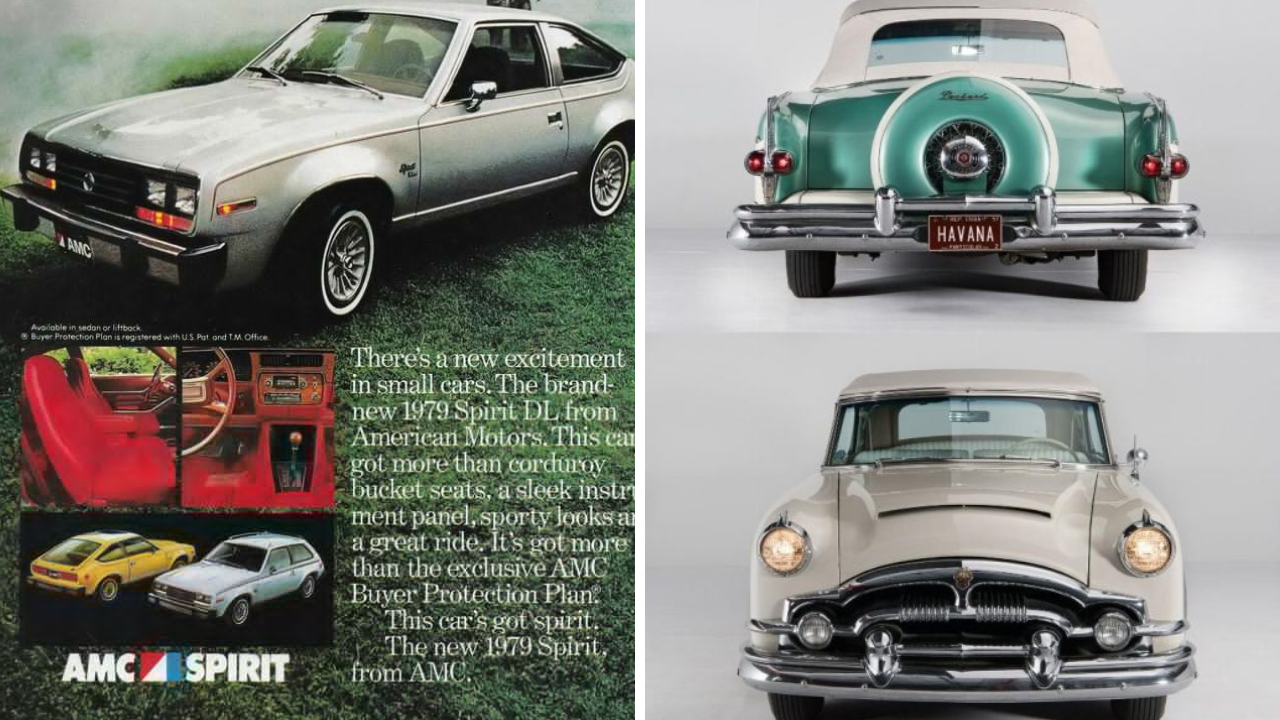
Packard was once America’s answer to Rolls-Royce, with elegant luxury cars in the early 20th century. It merged with Studebaker in the 1950s, but quality dropped and the brand fizzled by 1958.
Studebaker

One of the OGs, Studebaker, started with wagons in the 1800s! It made some cool cars, but by 1966, it couldn’t keep up with the Big Three. The Avanti still has that retro-future magic.
Isuzu (in the U.S.)

Isuzu made rugged SUVs and trucks, but stopped selling passenger vehicles in the U.S. in 2009. Globally, it’s still around but Americans miss the Trooper and Rodeo. Simple, reliable, and underrated.
Suzuki (in the U.S.)

Suzuki pulled out of the U.S. car market in 2012, even though it made some decent compact cars. The brand just couldn’t compete here, but it’s still going strong elsewhere. The Sidekick was a little 4×4 legend.
Triumph

Known for sporty British convertibles, Triumph cars had real charm. Financial trouble and quality issues led to the brand’s shutdown in 1984. The Spitfire still sparks joy among vintage fans.
AMC (American Motors Corporation)

AMC was the little guy taking on the giants, and it gave us classics like the Gremlin and the Jeep CJ. It got swallowed by Chrysler in 1987 and faded out. But its legacy lives on in Jeep.
NSU

This German brand was once known for being innovative, especially with the rotary engine. It merged into Audi in the 1960s and disappeared, but it laid the groundwork for future designs. NSU fans are few but fiercely loyal.
Moskvitch

The Soviet-era brand made tough, boxy cars that were built to survive anything. It disappeared in the early 2000s after the Russian market modernized. There’s a strange charm to their brutal simplicity.
Holden

Australia’s beloved carmaker, Holden, stopped building cars in 2017 and shut down entirely in 2020. It was a major part of Aussie identity, especially with the Commodore. The end of Holden felt like the end of an era down under.
Daihatsu (in the U.S.)

This tiny car brand had a brief moment in America during the late ’80s and early ’90s. Low prices weren’t enough to overcome its limited lineup, and it left by 1992. Now it’s a JDM favorite.
Autobianchi

A quirky Italian microcar brand under Fiat, known for compact city cars with flair. It was merged into Lancia in the ’90s. The A112 was like a Fiat 500’s artsy cousin.
Tucker

Tucker only built 51 cars in the 1940s, but they were revolutionary featuring things like seat belts and pop-out windshields. Legal drama and big-industry politics killed it early. Those cars are now priceless collector items.
Simca

A French brand that tried to make waves with quirky and affordable cars. It was absorbed into Chrysler Europe and vanished by the 1980s. It’s mostly a trivia answer now, but it had its moment.
Jensen Motors

Jensen was a boutique British brand that made sleek, stylish GT cars in the ‘60s and ‘70s. Financial struggles forced it to shut down in 1976.
Talbot

Talbot was a European brand with a complicated family tree, bouncing between French and British ownership. It was known for rally wins in the ’70s and ’80s, but faded into obscurity and was discontinued in 1994.
Zastava

Made in Yugoslavia, Zastava’s cars were simple, boxy, and tough. It’s best known for the Yugo, which became a punchline in the U.S.—but hey, it was $4,000 new. The company stopped in 2008, but it’s got cult status now.
Duesenberg

Duesenberg was the ultimate luxury car of the 1920s and ‘30s, flashy, powerful, and built like a work of art. The Great Depression and high prices led to its end in 1937, but the name still means “top of the line.”
Saab

Saab wasn’t just a car, it was a vibe. The quirky Swedish brand mixed jet-inspired design with safety and smarts, but financial trouble and a messy breakup with GM led to its end in 2012. People who drove Saabs loved their Saabs.
Pontiac

Pontiac was known for making bold, sporty cars like the Firebird and GTO. GM pulled the plug in 2010 after the recession hit hard, and the brand just couldn’t recover. It’s a shame, Pontiac had personality in a sea of boring.