Plagiarism has been around for as long as people have been putting ideas on paper, and the cases that get remembered tend to share one quality: they involve someone whose reputation made the revelation land harder than it otherwise would have. A poet, a president, a Beatle, a Nobel Prize winner. The list ahead spans over two thousand years and crosses literature, music, academia, politics, and art, and what makes each case worth knowing is less the act itself and more the combination of who did it, how it was discovered, and what happened next.
Martial and Fidentinus (80 AD)

The Roman poet Martial discovered a man named Fidentinus reciting his poems in public as his own, and responded by publicly branding him a “plagiarius,” meaning kidnapper, which is where the word plagiarism comes from.
Shakespeare and George North

Anti-plagiarism software found significant similarities between several Shakespeare plays and an unpublished 1576 manuscript by George North called “A Brief Discourse of Rebellion,” including matching word clusters that appear nowhere else in Elizabethan literature.
Samuel Johnson’s dictionary

Johnson defined plagiarism in his 1755 dictionary as “a thief in literature,” and scholars later found that his own dictionary borrowed dozens of definitions almost word for word from earlier dictionaries without any acknowledgment, which is either ironic or exactly what you’d expect.
Coleridge and Schelling

Samuel Taylor Coleridge lifted substantial passages from German philosopher Friedrich Schelling’s work for his 1817 literary biography Biographia Literaria, and the borrowing was so extensive that modern scholars consider entire sections of the book to be translations rather than original thought.
Helen Keller and “The Frost King”

Keller wrote a story at age eleven that turned out to be nearly identical to a published tale by Margaret T. Canby, and while Keller maintained she hadn’t knowingly copied it, the investigation scarred her deeply and made her anxious about her own originality for the rest of her life.
Stendhal’s debut book

The French novelist’s 1814 debut, The Lives of Haydn, Mozart, and Metastasio, turned out to be almost entirely translated without credit from an Italian biography by Giuseppe Carpani, a writer Stendhal had never once acknowledged in the text.
Martin Luther King Jr.’s dissertation

Boston University discovered after King’s assassination that roughly a third of his 1955 doctoral dissertation had been lifted from another student’s thesis without attribution, a finding that the university handled quietly by noting the plagiarism in its records without revoking the degree.
George Harrison’s “My Sweet Lord”

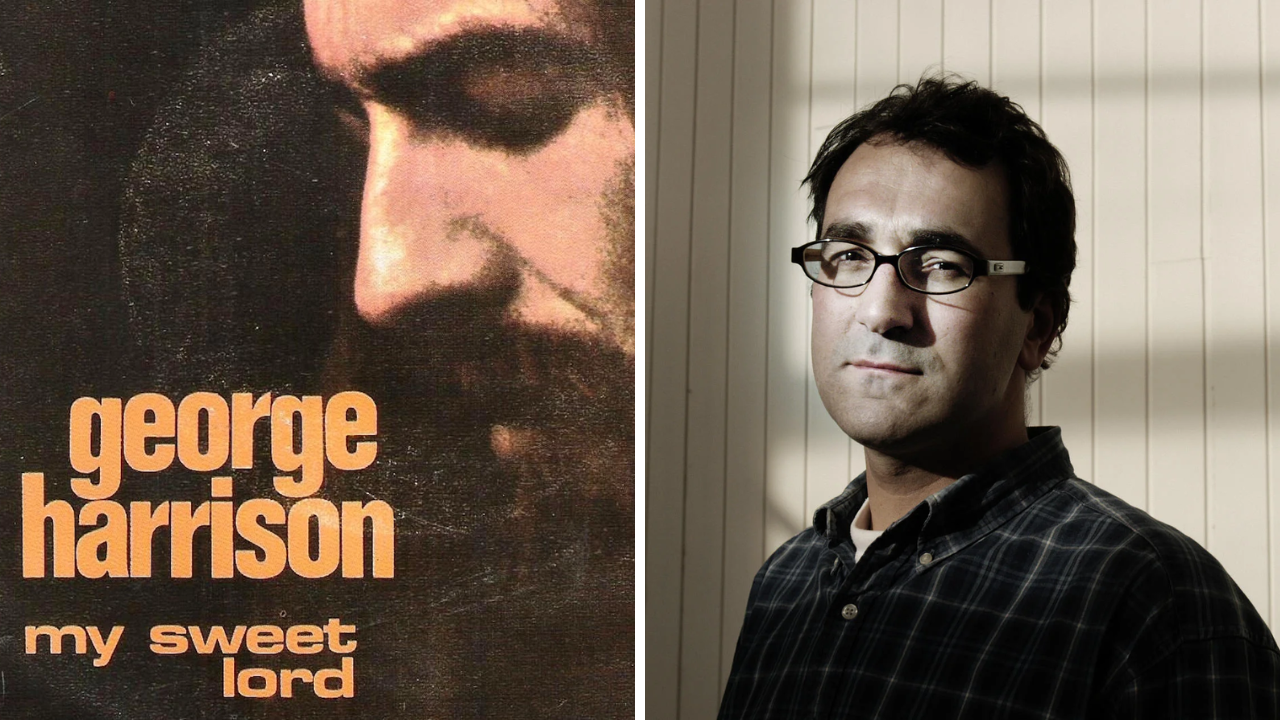
A court ruled in 1976 that Harrison had subconsciously copied “He’s So Fine” by The Chiffons when writing “My Sweet Lord,” making it the first major ruling on unconscious plagiarism in music history, and Harrison later bought the rights to the original song, effectively paying for what he’d taken without knowing it.
Alex Haley and “Roots”

Two separate plagiarism suits were filed against Haley after “Roots” was published in 1976, and while one was dismissed, the other, brought by novelist Harold Courlander, was settled out of court for $650,000 after identical passages were found in both books, a settlement Haley accepted without admitting wrongdoing.
G.D. Birkhoff and the ergodic theorem

In the early 1930s, senior mathematician Birkhoff reviewed John von Neumann’s unpublished proof of the “mean ergodic theorem,” then published his own improved version under a different name a year before von Neumann’s paper appeared, with no mention of whose work had come first.
Saddam Hussein’s UN declaration

When the United Nations requested documentation of Iraq’s weapons program in 2002, Saddam Hussein’s government submitted a document that copied large sections directly from a 1990s UN report, with criticism of Iraq conveniently deleted, producing a plagiarized government document submitted to the body it was plagiarizing.
Doris Kearns Goodwin

The Pulitzer Prize-winning historian was found in 2002 to have lifted passages from multiple sources for her 1987 Kennedy family biography without attribution, and her explanation that her note-taking system had confused her own words with quoted material was accepted by some and dismissed by most.
Stephen Ambrose

The bestselling military historian was found to have lifted passages without attribution from multiple sources across several of his most popular books, and the revelations came in quick succession in 2002, each one compounding the damage to a reputation he had spent decades building.
Jayson Blair and The New York Times

Blair resigned from the Times in 2003 after an internal investigation found he had fabricated quotes, invented scenes, and copied passages from other publications in dozens of articles, triggering a crisis at one of the world’s most trusted newspapers that led to the resignation of two senior editors.
Dan Brown and “Holy Blood, Holy Grail”

The authors of the 1982 non-fiction book “Holy Blood, Holy Grail” sued Brown in 2006, claiming “The Da Vinci Code” plagiarized their research and central thesis, and while a British court ruled against them, the case raised serious questions about how much of a non-fiction framework a novelist can borrow before inspiration becomes theft.
Radiohead and The Hollies

After releasing “Creep” in 1992, Radiohead was sued by the writers of The Hollies’ 1974 song “The Air That I Breathe” over similarities in the chord progression, and the band settled by adding the songwriters to the credits, meaning two people Thom Yorke had never met share credit on what became one of the most played songs of the 1990s.
Robin Thicke and Marvin Gaye

A jury awarded Marvin Gaye’s estate nearly $7.4 million in 2015 after ruling that “Blurred Lines” copied “Got to Give It Up,” and the verdict was controversial enough within the music industry that it prompted widespread concern about whether sharing a stylistic feel rather than a specific melody could constitute infringement.
Led Zeppelin and “Stairway to Heaven”

Spirit guitarist Randy California claimed for years that the opening of “Stairway to Heaven” was lifted from his 1968 instrumental “Taurus,” and after California drowned in 1997 his estate pursued the case in court, winning an initial verdict before an appeals court overturned it in 2020 on the grounds that the similarities were too general to constitute infringement.
The “Hope” poster

Artist Shepard Fairey built his career on appropriating found images, and when his Barack Obama “Hope” poster became the defining image of the 2008 campaign, the Associated Press identified it as based on a photograph taken by their photographer Mannie Garcia and sued for copyright, settling in 2011 with a profit-sharing agreement after Fairey was caught destroying evidence.
Melania Trump’s convention speech

When Melania Trump’s 2016 Republican National Convention speech was analyzed side by side with Michelle Obama’s 2008 Democratic convention speech, the overlapping passages were specific enough to eliminate coincidence, and the Trump campaign’s initial denial, followed by a speechwriter’s eventual apology, made the episode a case study in how not to manage a plagiarism scandal.
Joe Biden’s 1987 campaign

Biden’s first presidential campaign collapsed in 1987 when it emerged that he had used passages from a speech by British politician Neil Kinnock without attribution, and a subsequent review found similar borrowing in a law school paper, a combination that ended his candidacy within weeks of the first revelation.
Cristiane Serruya

In 2019, romance author Courtney Milan recognized her own work in a novel by Brazilian writer Cristiane Serruya and said so publicly, triggering a wave of similar discoveries from dozens of other authors whose work Serruya had incorporated into her 30-book career, and Serruya’s attempt to blame a ghostwriter for all of it generated more damage than the original accusation.
Jonah Lehrer

The science writer’s career collapsed in 2012 when it emerged that he had not only recycled passages from his own earlier work across multiple publications without disclosure but had also fabricated Bob Dylan quotations in his book “Imagine,” a detail discovered by a journalist who simply asked Dylan’s representatives whether the quotes were real.
Kaavya Viswanathan

Harvard student Viswanathan’s debut novel “How Opal Mehta Got Kissed, Got Wild, and Got a Life” was pulled from shelves in 2006 after reviewers identified more than 40 passages borrowed from novels by Megan McCafferty, and the publisher recalled all copies and cancelled a planned second book, effectively ending a career before it began.
Richard Prince’s Instagram prints

Prince took other people’s Instagram photos, added brief comments as the sole creative contribution, printed them at large scale, and sold them for up to $100,000 each at Frieze New York in 2014, and when the photographers sued, an appeals court ultimately allowed the works under fair use in a ruling that left the art world genuinely unsettled about where appropriation ends and theft begins.
Diederik Stapel

The Dutch social psychologist admitted in 2011 to having fabricated data in over 50 academic papers across his entire career, inventing findings from studies that never took place and submitting them to peer-reviewed journals, and the scale of the fraud was large enough to prompt a review of the field’s publication practices that is still ongoing.