The financial foundations of the United States were built on a chaotic, experimental, and frequently beautiful landscape of paper money. Long before the greenback became the undisputed global standard of commerce, early Americans navigated an economy flooded with strange denominations, revolutionary propaganda, and massive inter-bank certificates. Exploring the origins of this tender reveals stories of wartime sabotage, brilliant anti-counterfeiting innovations, and astonishingly high bills that seem entirely fictional. Highlighting the incredible evolution of national wealth.
The Birth Of Continental Currency

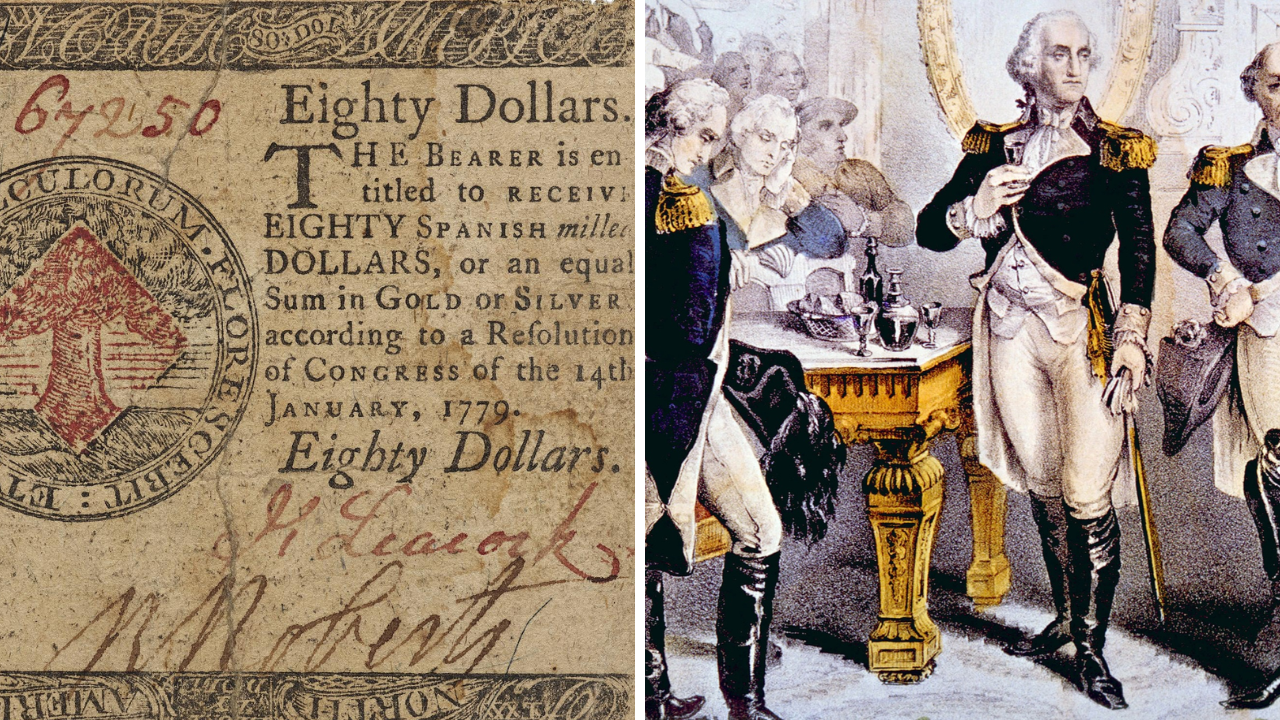
When the Thirteen Colonies united to fight the British, they faced a massive financial deficit that required immediate action. The Continental Congress authorized the printing of a new national paper money to fund the military effort. Backed merely by the anticipation of future tax revenues, this fiat money system flooded the rebellious states with millions of dollars in paper notes. This initial experiment in a unified financial system laid the volatile groundwork for modern national banking.
The Enduring Two Dollar Bill

Despite modern assumptions that it is a rarity, this denomination maintains a steady presence throughout the financial history of the nation. The face features Thomas Jefferson, while the reverse side displays an intricate reproduction of John Trumbull’s painting depicting the drafting of the Declaration of Independence. Consumers often hoard them under the false belief that they are highly valuable collector pieces, even though billions remain in active circulation.
British Counterfeiting Tactics

During the Revolutionary War, British forces deliberately forged massive quantities of colonial paper money to collapse the fragile rebel economy. Loyalist printing presses in New York churned out flawless duplicates of the original notes and distributed them across military lines. This coordinated economic sabotage severely destabilized local markets by causing rampant hyperinflation. General George Washington eventually recognized this tactic as a weapon equally dangerous as enemy artillery.
The Five Hundred Dollar Bill

Featuring the portrait of President William McKinley, this note primarily served large cash transactions before the era of digital banking. The Treasury Department officially discontinued its circulation alongside other large denominations in 1969 to curb organized crime and money laundering. Dealers frequently auction these historic bills for thousands of dollars to dedicated numismatists due to their extreme scarcity.
Benjamin Franklin And Nature Prints

To combat the rampant forgery crippling early economies, Benjamin Franklin pressed actual tree leaves into lead plates to create intricate nature prints on the reverse side of paper notes. The complex vein patterns of a real leaf proved nearly impossible for contemporary counterfeiters to replicate with standard engraving tools.
The One Thousand Dollar Bill

Alexander Hamilton originally graced the front of this massive denomination before the Treasury replaced him with President Grover Cleveland. Banks utilized these large notes to settle high-value internal transfers quickly before wire systems became instantaneous and secure. Like its five-hundred-dollar counterpart, the government halted distribution in 1969 under the directive of President Richard Nixon. Only a small fraction of the original print run avoided destruction at Federal Reserve banks.
Paul Revere And The Sword In Hand

Beyond his famous midnight ride, Paul Revere contributed to the war effort by engraving some of the most striking early Massachusetts colonial notes. He designed currency featuring a patriot clutching a sword alongside the Magna Carta to establish a distinct visual identity for the rebellion against the British Crown. Surviving specimens of this specific artwork represent some of the most valuable colonial artifacts in existence.
The Five Thousand Dollar Bill

President James Madison appears on this incredibly scarce denomination, which saw minimal use outside of inter-bank settlements. Due to their limited utility and subsequent mass destruction by the government, numismatic experts estimate that fewer than four hundred of these specific notes exist outside of institutional museums.
The Phenomenon Of Depreciation

Because the Continental Congress lacked the hard gold or silver to back their massive wartime print runs, the paper money quickly lost its purchasing power. By the end of the Revolutionary War, the inflation rate had skyrocketed so severely that the currency became virtually worthless in local markets. This catastrophic economic failure spawned the popular phrase “not worth a Continental” to describe anything of zero value. The crisis ultimately forced the architects of the Constitution to include strict regulations regarding the coinage of money.
The Ten Thousand Dollar Bill

Standing as the largest denomination ever circulated to the general public, this bill featured the portrait of Salmon P. Chase. Chase served as Abraham Lincoln’s Secretary of the Treasury and played a crucial role in establishing the modern national banking system. The few remaining examples are considered the ultimate prize for high-end currency collectors due to their massive historical face value.
Fractional Colonial Currency

A severe coin shortage in the early colonies forced local governments to print paper money in unusual, fractional denominations like one-third or one-sixth of a standard dollar. These small change notes degraded rapidly due to the heavy wear and tear of daily market transactions, leaving historians with few intact specimens.
Discontinuing The High Denominations

In an effort to paralyze illicit cartels and tax evaders, federal authorities radically shifted their printing strategy during the late twentieth century. By halting the distribution of all bills larger than one hundred dollars, the government made smuggling large sums of cash physically burdensome. The Federal Reserve began actively destroying any large notes that commercial banks returned to their vaults. This decisive policy shift permanently altered the physical landscape of American cash transactions.
Unfinished Pyramid Symbolism

Long before it appeared on the modern one-dollar bill, an iconic incomplete pyramid of thirteen steps graced the 1779 fifty-dollar Continental note. Designed by Francis Hopkinson, the imagery reinforced the concept that the young nation was still under active construction and facing an uncertain future. The visual metaphor proved so powerful that it was later incorporated directly into the Great Seal of the United States.
The John Marshall Note

An earlier iteration of the five-hundred-dollar bill featured Chief Justice John Marshall on its obverse side and explorer Hernando de Soto discovering the Mississippi River on the reverse. This specific dual-themed design is widely considered one of the finest surviving examples of early twentieth-century currency engraving.
Early State Issued Paper Money

Before the ratification of the Constitution centralized the financial system, individual colonies frequently printed their own unique paper notes to fund local militias and public infrastructure. This fragmented approach created a chaotic exchange market where merchants constantly had to calculate the shifting exchange rates between different colonial borders. The resulting economic confusion stifled interstate commerce and alienated foreign trade partners. Consequently, the crisis became a primary argument for establishing a strong federal government with a unified national treasury.
The Fighting Birds Motif

The three-dollar Continental note printed in 1776 featured a fierce visual allegory depicting an eagle clashing violently with a heron. The Latin motto hovering ominously above the warring birds represented the colonial struggle against a much larger predatory empire. This striking piece of propaganda directly integrated deep political anxiety into the physical economy.
Funding Colonial Public Works

Local municipalities often utilized the printing press to finance large-scale civic improvements, such as the New York Water Works issuing specific notes to fund a public water supply. Citizens who accepted these notes were essentially investing directly into the modernization of their own municipal infrastructure.
The Hundred Thousand Dollar Note

Displaying the portrait of Woodrow Wilson, this colossal gold certificate was never intended for public hands or private wallets. The Treasury printed these notes in 1934 strictly for official transactions between various Federal Reserve banks across the country. Because owning one of these bills is legally prohibited for private citizens, the sheer scale of this denomination makes it the most mythical piece of paper ever produced by the federal government.