For centuries, wearing a crown has been considered the ultimate privilege. Yet throughout history, kings, queens, and princes have walked away from that power — some for love, others out of duty, scandal, or sheer exhaustion. These are 30 royals who chose, or were forced, to let go.
1. King Edward VIII

On December 10, 1936, Edward abdicated the British throne to marry American divorcée Wallis Simpson, becoming one of the shortest-reigning British monarchs at just 326 days. He told the nation by radio: “I have found it impossible to carry the heavy burden of responsibility without the help and support of the woman I love.” No member of the royal family attended his wedding. He became the Duke of Windsor and lived the rest of his life in exile, dying in France in 1972.
2. Queen Margrethe II of Denmark

After 52 years on the throne, Margrethe II abdicated in January 2024 in favor of her son, now King Frederik X, citing health concerns following back surgery. She became the first Danish monarch to abdicate in nearly 900 years, and did so at a moment of extraordinary popularity — her approval rating stood at around 80%. Beyond her royal duties, she was an accomplished painter and illustrated the Danish edition of Tolkien’s Lord of the Rings under a pseudonym.
3. Emperor Akihito of Japan

Akihito abdicated in April 2019 in favor of his son, Emperor Naruhito, making it the first abdication in Japan in over 200 years. Because Japanese law required emperors to reign until death, new legislation had to be passed specifically to allow it. He underwent prostate cancer surgery in 2003 and heart surgery in 2012, and cited his age and declining health as reasons he could no longer fulfill his duties as a symbol of the state. Before stepping down, he performed a sacred ceremony at the Ise Grand Shrine to inform the gods of his resignation.
4. Princess Mako of Japan

A niece of Emperor Naruhito, Mako gave up her royal title in 2021 to marry her college boyfriend Kei Komuro, a commoner. Their path to the altar was a years-long ordeal, delayed by a public dispute over a financial debt involving Komuro’s mother. The couple eventually married in a private ceremony and relocated to New York City.
5. Prince Harry and Meghan Markle

In January 2020, Harry and Meghan announced they were stepping back as senior members of the British royal family. They moved first to Canada, then to Montecito, California, where they live with their children Archie and Lilibet. The couple retained their Duke and Duchess of Sussex titles but gave up their HRH styles and Harry relinquished his military titles. Their 2021 interview with Oprah Winfrey, in which they made allegations about racism within the royal family, sent shockwaves around the world.
6. Queen Christina of Sweden

One of the most brilliant and unconventional monarchs of the 17th century, Christina was crowned at five years old after her father Gustav II Adolf died in battle. She helped bring the Thirty Years’ War to an end and turned the Swedish court into one of Europe’s great cultural centers. In 1654, she stunned the continent by voluntarily abdicating, converting secretly to Catholicism and relocating to Rome. She never married, often dressed as a man, and spent the rest of her long life as one of the most celebrated intellectuals in Europe.
7. King Juan Carlos I of Spain

Juan Carlos ascended the Spanish throne in 1975 following the death of Francisco Franco, who had designated him as successor. He abdicated in 2014 in favor of his son Felipe VI. Six years later, he left Spain under a cloud of corruption allegations involving $100 million in kickbacks connected to a Saudi railway project. He spent two years in the UAE before returning to Spain in 2022 after several fraud investigations were dropped.
8. Beatrix of the Netherlands

In January 2013, Beatrix announced on national television that she was abdicating after 33 years on the Dutch throne, handing power to her eldest son, Willem-Alexander. She explained it was time to place responsibility in the hands of a new generation. At 75, she was the oldest reigning Dutch monarch in history. Notably, she was the third successive Dutch queen to abdicate — following her grandmother Wilhelmina and her mother Juliana — making abdication something of a Dutch royal tradition.
9. King Leopold III of Belgium

Leopold III’s reputation never recovered from his decision to remain in Belgium after Nazi Germany invaded in 1940, surrendering without his government’s consent. His exiled prime minister called him a traitor. After the war, the country was bitterly divided over whether to allow his return, with Flanders largely supporting him and Wallonia opposed. A 1950 referendum produced only a slim majority in his favor. Fearing civil war, Leopold abdicated in 1951 in favor of his son Baudouin.
10. Prince Andrew

After stepping back from royal duties in 2019 over his ties to Jeffrey Epstein, Andrew was stripped of his military titles in 2022. In October 2025, he lost the use of “Duke of York,” and on November 3, 2025, King Charles removed his “Royal Highness” and “Prince” titles entirely, making him simply Andrew Mountbatten-Windsor. He was evicted from Royal Lodge and arrested in February 2026 over the Epstein files, but remains eighth in line to the throne.
11. Princess Ayako of Japan
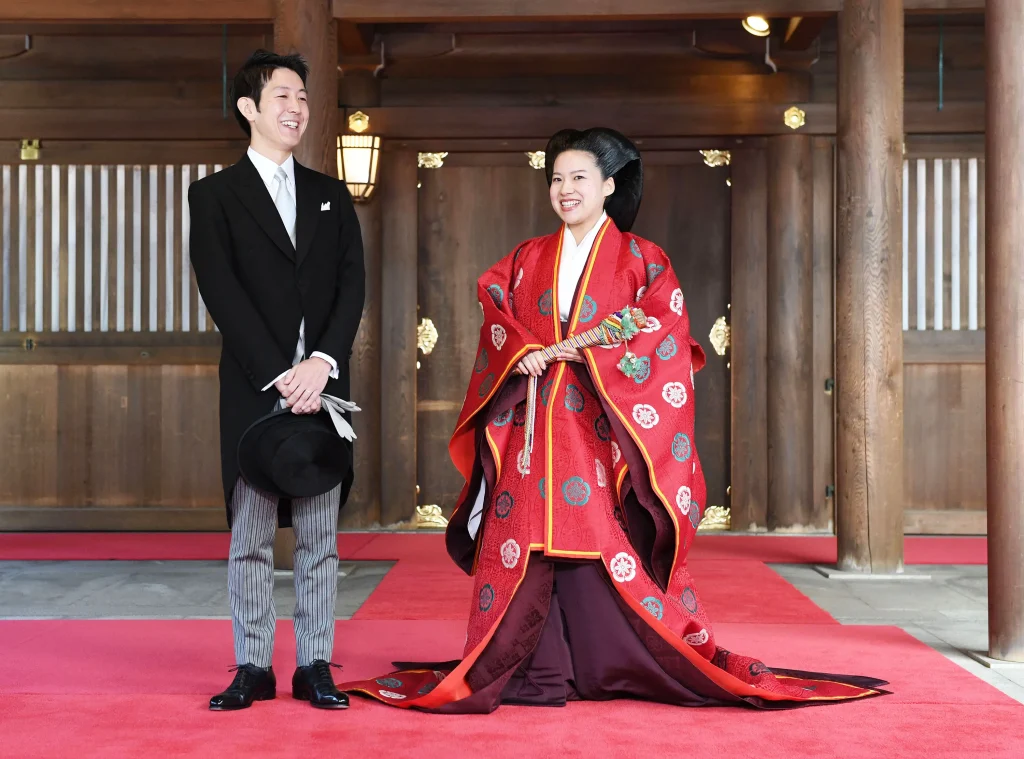
The youngest daughter of the late Prince Takamado, Ayako, gave up her princess title in 2018 to marry Kei Moriya, a shipping executive. She took her husband’s last name, as required by law, and left the Imperial Family. The couple was reportedly introduced by Ayako’s mother, who was a close friend of Moriya’s parents. They now have three sons and live in Tokyo.
12. Kaiser Wilhelm II of Germany

The last German Emperor abdicated on November 9, 1918, as Germany faced military collapse and revolution at the end of World War I. He was pressured by his own chancellor, who announced the abdication without Wilhelm’s formal consent to prevent further chaos. Wilhelm fled to the Netherlands, where he lived in exile until his death in 1941. He spent much of that time chopping wood on his estate at Doorn, reportedly filling hundreds of cords per year. He never returned to Germany.
13. Napoleon Bonaparte

Napoleon abdicated twice. The first time, in April 1814, came after a coalition of European powers invaded France and his own marshals refused to continue fighting. He was exiled to Elba, escaped, returned to power, lost at Waterloo, and abdicated a second time in June 1815. He was then exiled to the remote island of Saint Helena in the South Atlantic, where he died six years later. Few figures in history have risen and fallen — and risen again — so dramatically before the final curtain.
14. King Farouk I of Egypt

Farouk ascended the Egyptian throne at 16 and inherited extraordinary wealth — five palaces, 200 cars and two yachts. His reign became increasingly associated with corruption, personal excess and political failure, culminating in the humiliating defeat in the 1948 Arab-Israeli War. In July 1952, the Free Officers Movement led by Gamal Abdel Nasser and Mohammed Naguib overthrew his government. Farouk abdicated and was given 12 hours to leave the country. He spent the rest of his life in Monaco and Italy, dying in Rome in 1965.
15. Queen Mary I of Scotland (Mary Queen of Scots)

Mary became Queen of Scotland at just six days old and grew up to claim she was also the rightful Queen of England. Her life was defined by ambition, poor judgment in marriage, and catastrophic political miscalculation. Her third marriage — to the man widely suspected of murdering her second husband — turned her lords against her. She was captured and forced to abdicate in 1567 in favor of her infant son James VI. She fled to England seeking help from her cousin Elizabeth I and instead spent 19 years imprisoned before her execution in 1587.
16. King Carol II of Romania

Carol’s personal life was a saga of scandal. He secretly married a commoner in 1918, had the marriage annulled, then conducted a notorious affair with Magda Lupescu that scandalized the country and forced him to renounce his succession rights in 1925. Despite that, a political crisis brought him back to the throne in 1930. His second reign turned authoritarian, culminating in a royal dictatorship by 1938. Facing popular unrest and military pressure in 1940, he abdicated and fled the country, eventually dying in exile in Portugal in 1953.
17. Princess Märtha Louise of Norway

In November 2022, Märtha Louise stepped back from her working royal role and gave up her patronages to separate her public duties from her business activities, which include work as a self-described spiritual guide alongside her husband Durek Verrett. Though two years older than her brother Crown Prince Haakon, she was never in line for the throne — Norway only adopted gender-equal succession rules in 1990, and they apply only to those born after that year. She has three daughters from her first marriage.
18. Prince Philip

Born a prince of both Greece and Denmark, Philip renounced his royal titles and became a naturalized British subject in order to marry the future Queen Elizabeth II in November 1947. He was baptized into the Church of England ahead of the ceremony and took his mother’s anglicized family name, Mountbatten. Despite giving up his titles, he became the longest-serving royal consort in British history. The couple were married for 73 years before his death in 2021 at age 99.
19. Princess Patricia of Connaught

A granddaughter of Queen Victoria, Patricia was one of the most eligible royals of her era, with suitors that included a Spanish king, the Prince Royal of Portugal, and a brother of the last Russian Tsar. She renounced her royal title in 1919 to marry Alexander Ramsay, a naval officer and commoner who served as her father’s aide-de-camp. She became Lady Patricia Ramsay and remained active in charitable causes and public life for decades. Painting was among her greatest passions, and she was made an honorary member of the Royal Institute of Painters in Water Colours.
20. King Michael I of Romania

Forced to abdicate not once but twice, Michael first took the throne as a child in 1927 when his father Carol II renounced his rights, then lost it when Carol returned in 1930. He became king again in 1940 at 18, played a key role in Romania’s dramatic switch of alliances in 1944, and was awarded the Legion of Honor by France and the Soviet Order of Victory. Despite that, the communist government that took power forced him to abdicate at gunpoint on December 30, 1947, threatening to execute student dissidents if he refused.
21. Princess Ubolratana of Thailand

Princess Ubolratana relinquished her royal title in 1972 when she married American citizen Peter Ladd Jensen, as Thai palace law bars royals from some titles if they marry foreigners. She divorced in 1998 and returned to Thailand permanently. In 2019, she accepted a nomination for prime minister from a political party, but the Constitutional Court dissolved the party and ruled the nomination unconstitutional, as members of the royal family must remain above politics. Outside of all that, she is a fashion icon who has starred in films and performed on stage with a Thai pop group.
22. Prince Johan Friso of the Netherlands

Second in line to the Dutch throne, Friso lost his titles and succession rights in 2004 after marrying humanitarian Mabel Wisse Smit without seeking parliamentary approval, as required by the constitution. The approval was not sought partly because Mabel had not been fully transparent about her past connections to a prominent Dutch criminal. Friso died at 44 in 2013 from complications following a skiing accident in the Austrian Alps, having spent over a year in a coma.
23. Peter Phillips and Zara Tindall

Princess Anne’s two children were offered royal titles at birth by Queen Elizabeth II, but Anne and her then-husband Mark Phillips declined on their behalf, wanting them to have ordinary lives. Neither Peter nor Zara hold a title. Zara became an accomplished equestrian who won a silver medal at the 2012 London Olympics, while Peter works in sports management. Both have said they feel fortunate to have grown up outside the constraints of royal protocol.
24. Prince Michael of Kent

A cousin of Queen Elizabeth II, Michael gave up his 15th place in the line of succession in 1978 to marry a Catholic — Baroness Marie-Christine von Reibnitz — at a time when the Act of Settlement 1701 barred any royal who married a Catholic from remaining in the line of succession. His place was restored in 2015 following a change in the law. His wife, who became Princess Michael of Kent, drew widespread criticism in 2017 when she wore a Blackamoor brooch to her first meeting with Meghan Markle at Buckingham Palace.
25. Swedish Royal Family Grandchildren

In 2019, King Carl XVI Gustaf removed the His/Her Royal Highness titles from five of his grandchildren, clarifying which family members would be expected to carry out official royal duties. The five children retain their prince and princess titles and remain in the line of succession, but their future spouses and children will have no automatic right to royal status.
26. Tsar Nicholas II of Russia

Nicholas II abdicated on March 15, 1917, as revolution swept across Russia and his own generals told him the army could no longer guarantee order. He had hoped to pass the throne to his brother Michael, who declined it within 24 hours — effectively ending the Romanov dynasty after 304 years. Nicholas, his wife Alexandra and their five children were placed under house arrest, moved east to Yekaterinburg, and executed by Bolshevik forces on July 17, 1918. His abdication marked the end of the Russian Empire.
27. Queen Wilhelmina of the Netherlands
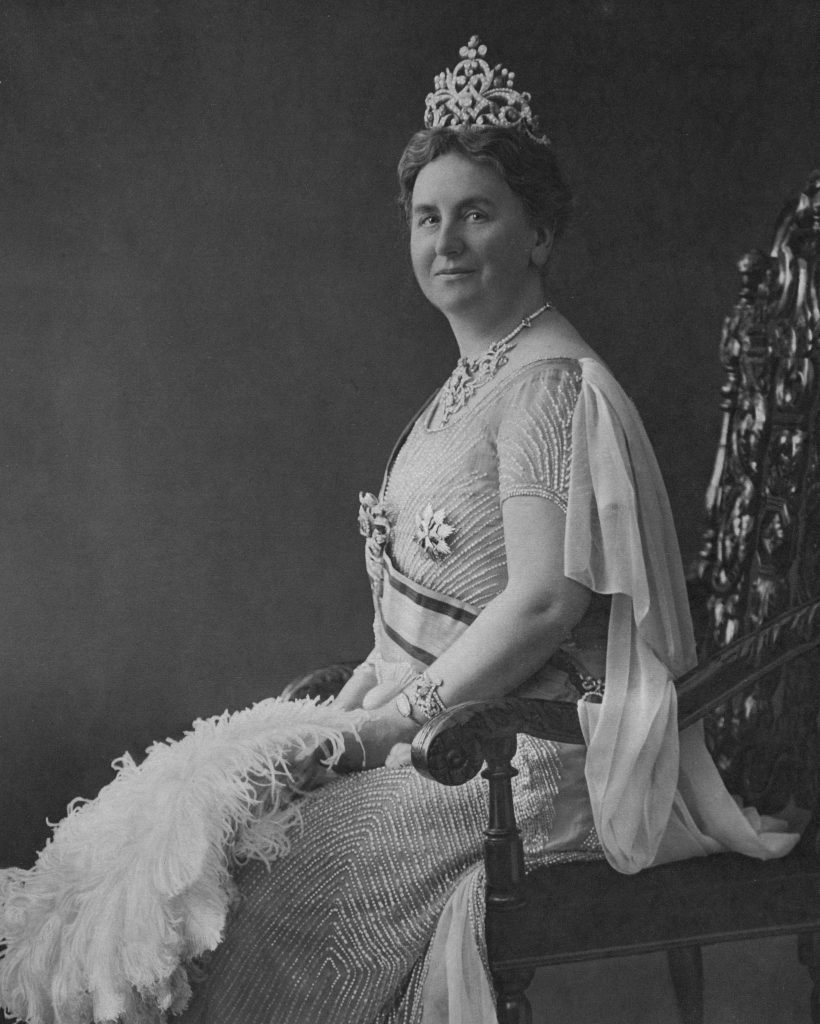
Wilhelmina became queen at ten years old in 1890 and led her government-in-exile from London throughout World War II, becoming a symbol of Dutch resistance. She abdicated in 1948 at age 68, citing physical exhaustion after the demands of the war years, and passed the throne to her daughter Juliana. She was the first Dutch queen to abdicate, starting a pattern that would continue with Juliana in 1980 and Beatrix in 2013 — three generations of queens who chose retirement over reigning until death.
28. King Victor Emmanuel III of Italy

Victor Emmanuel III ruled Italy from 1900 and made the fateful decision in 1922 to appoint Mussolini as prime minister rather than oppose his March on Rome. He signed the racial laws against Jews in 1938 and declared war alongside Germany. As the Allies advanced in 1946 and a referendum on the monarchy loomed, he abdicated in favor of his son Umberto II in a last-ditch effort to save the Crown. It failed — Italians voted to become a republic weeks later. Both father and son died in exile, Victor Emmanuel in Egypt in 1947.
29. Emperor Diocletian
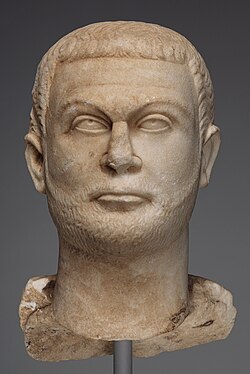
In 305 AD, the Roman Emperor Diocletian became the first in the empire’s history to voluntarily give up the throne. It was a decision so unthinkable that contemporaries struggled to make sense of it. He had spent 21 years stabilizing an empire stretched from Spain to Palestine, defeating rivals and rebuilding the military. His reasoning was simple: he was 60 and wanted peace. He retired to his palace in what is now Split, Croatia, where he grew cabbages and refused all entreaties to return to power, reportedly asking those who came to beg him back if they had seen the vegetables he had planted.
30. Queen Liliuokalani of Hawaii

Hawaii’s last monarch inherited a throne already gutted by the 1887 “Bayonet Constitution,” which American businessmen had forced on her brother King Kalākaua. When she tried to restore royal power and Native Hawaiian voting rights in 1893, the American-led Committee of Safety, backed by US Marines, overthrew her government. She yielded under protest and formally abdicated in 1895. Hawaii was annexed in 1898, and she protested until her death in 1917.