Turns out the smartest career move for some of the biggest names in entertainment was walking away from it. Here are some examples.
1. George Clooney, Casamigos Tequila

Clooney started Casamigos in 2013 as a private tequila he and two friends made for themselves, never planning to sell it commercially. They ended up selling it to Diageo in 2017 for up to $1 billion. He made more from that deal than from his entire acting career combined, which is not a sentence that gets easier to read the more you think about it.
2. Rihanna, Fenty Beauty

Rihanna’s net worth crossed a billion dollars not through music but through Fenty Beauty, the cosmetics line she launched in 2017 with LVMH. The brand addressed a gap in the market by offering 40 foundation shades from launch, which sounds like a basic product decision and turned out to be a revolution. Fenty generated $100 million in sales in its first 40 days and changed how the entire beauty industry approaches inclusivity.
3. Dr. Dre, Beats Electronics

Dre co-founded Beats Electronics in 2006, selling premium headphones at a time when most people were using the cheap earbuds that came in the box with their phones. Apple bought the company in 2014 for $3.2 billion, making it the most expensive acquisition in Apple’s history. Dre walked away with an estimated $800 million after taxes, more than any rapper had ever earned from a single transaction.
4. Jessica Alba, The Honest Company

Alba co-founded The Honest Company in 2011 after becoming frustrated with the lack of transparency in household and baby product ingredients. The company went public in 2021 and at its peak valuation made her worth over $200 million. She was the first to admit that the business experience was harder than anything she had done on a film set, which given some of her film sets is saying something.
5. Gwyneth Paltrow, Goop

Paltrow started Goop in 2008 as a weekly newsletter she sent to friends with recommendations for food, travel, and wellness. It became a lifestyle media company and then a full retail operation valued at over $250 million. The brand’s willingness to court controversy has kept it in the news consistently, which turns out to be one of the most effective marketing strategies available if you can sustain it.
6. Ashton Kutcher, Venture Capital

While still acting, Kutcher started investing in tech startups early enough to get into companies before most people had heard of them, including Airbnb, Spotify, Uber, and Skype. His fund A-Grade Investments became one of the most successful celebrity-backed venture operations, producing returns that his acting salary couldn’t touch. He showed up not just as a name on a cap table but as someone who understood the businesses he was backing.
7. Mary-Kate And Ashley Olsen, The Row

The twins walked away from acting in their early twenties and channeled their combined resources into The Row, a luxury fashion house that has nothing to do with their child star past. Critics who expected a celebrity vanity project were wrong. The Row is now considered one of the most serious luxury brands in American fashion, winning multiple CFDA awards and selling to the kind of customers who buy clothes for decades rather than seasons.
8. Paul Newman, Newman’s Own

Newman started his food company in 1982 as a joke, bottling homemade salad dressing in old wine bottles and giving it to friends as gifts. Then he put it in stores. Newman’s Own became a genuine food brand that expanded into pasta sauce, popcorn, lemonade, and dozens of other products, with all profits going to charity. By the time of his death in 2008, the company had donated over $300 million to charitable causes, which is a more interesting legacy than most people manage with a more deliberate plan.
9. George Foreman, The Grill

Foreman was already a two-time heavyweight champion and boxing legend when he agreed in 1994 to lend his name to a countertop electric grill. The George Foreman Grill went on to sell over 100 million units worldwide, and the licensing deal reportedly earned him $200 million, more than his entire boxing career. He later said he made more money from the grill in one year than he did in his entire boxing career combined.
10. 50 Cent, Vitaminwater

In 2004, 50 Cent took equity in Glacéau instead of a cash endorsement fee for promoting Vitaminwater. When Coca-Cola bought Glacéau in 2007 for $4.1 billion, his stake was worth an estimated $100 million after taxes. It was one of the most consequential decisions in the history of celebrity endorsements and established the template for taking equity over cash that countless artists have followed since.
11. Victoria Beckham, Fashion

Victoria Beckham launched her fashion label in 2008, and nobody in the industry took it seriously at first. A decade and a half later, the brand is a legitimate player in luxury fashion, stocked at the kind of retailers that don’t carry celebrity vanity projects. She has spoken openly about the years it took to be accepted by an industry that assumed she was a pop star playing dress-up, and the persistence it required to prove otherwise.
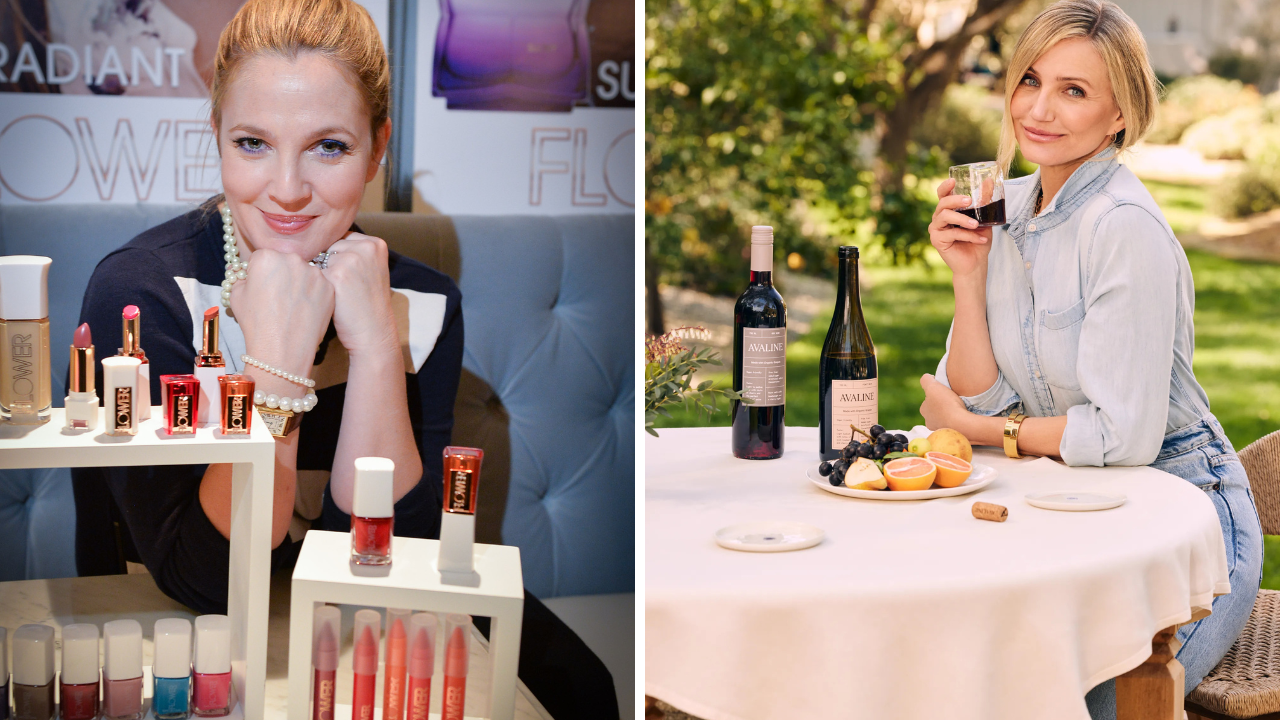
12. Cameron Diaz, Avaline Wine

Diaz retired from acting in 2014 and spent several years out of the public eye before co-founding Avaline, a clean wine brand focused on transparency in ingredients and production. The company grew quickly into a substantial operation distributed nationally. She has described the experience of building a business from scratch as more creatively fulfilling than most of her acting work, which is either a genuine revelation or the kind of thing that sounds better in a press release.
13. Arnold Schwarzenegger, Real Estate

Before he was a movie star, Schwarzenegger was already making money in real estate, buying his first apartment building with bodybuilding prize money in the late 1960s. By the time Terminator made him famous, he had a property portfolio generating income independent of Hollywood entirely. His acting career made him a global icon, but it was never his only financial strategy, which is why his wealth survived the periods when the film work slowed down.
14. Kevin Hart, Hartbeat

Hart built an entertainment company called Hartbeat that produces content across film, television, and digital platforms, giving him ownership of a production operation rather than dependence on studios to hire him. Combined with touring revenue, brand partnerships, and his Laugh Out Loud network, his annual earnings from the business infrastructure he has built outpace what any single film deal could deliver. He has been publicly clear that building something he owns was always the longer game.
15. Drew Barrymore, Flower Beauty

Barrymore launched Flower Beauty in 2012 as an affordable cosmetics line distributed through Walmart, a deliberate choice to reach a mass market rather than position it as a premium brand. She later added home goods and a daytime talk show, building a multi-stream business that earns consistently rather than in the peaks and valleys that characterize acting income. Her accessibility has always been both her brand’s personality and its commercial strategy.
16. Sarah Michelle Gellar, Foodstirs

After stepping back from acting, Gellar co-founded Foodstirs, an organic baking company focused on clean ingredients and sustainable packaging. The brand secured national retail distribution and became a meaningful business in a competitive food market. She has spoken about the transition as a deliberate choice to build something with long-term value rather than wait for the right acting role to come along.
17. Phoebe Cates, Blue Tree

After walking away from acting in the early nineties at the height of her fame, Cates opened Blue Tree, a luxury boutique on Madison Avenue in New York City. The store became a destination for high-end shoppers and celebrities and has been operating successfully for decades. She has given very few interviews about either decision, which is either a very intentional approach to privacy or simply proof that some exits don’t require an explanation.
18. Peter Ostrum, Veterinarian

Ostrum played Charlie Bucket in the original Willy Wonka and the Chocolate Factory in 1971, at 12 years old, and then never acted again. He went to college, became a veterinarian, and built one of the largest veterinary practices in upstate New York. He has given occasional interviews over the years and consistently describes his life as exactly what he wanted, which makes him one of the more quietly successful people on this list.
19. Michael Schoeffling, Custom Furniture

Schoeffling played Jake Ryan in Sixteen Candles in 1984, which made him one of the most recognizable faces of the decade, and then walked away from Hollywood entirely in the early nineties to open a custom furniture workshop in Pennsylvania. He has never spoken publicly about the decision. His handcrafted pieces sell to high-end clients and the business has operated quietly and successfully for decades. He remains one of the most complete disappearing acts in Hollywood history.
20. Jeff Cohen, Entertainment Law

Cohen played Chunk in The Goonies in 1985 and was one of the most beloved child actors of the decade. He stopped acting, went to law school, and became one of the most prominent entertainment lawyers in Hollywood, founding his own firm representing major media companies. He now works on the business side of the industry he grew up in, which is a more interesting second act than most people manage.
21. Oprah Winfrey, Harpo Productions

Winfrey negotiated ownership of her show from ABC in 1988, creating Harpo Productions and turning The Oprah Winfrey Show into an asset she controlled rather than a job she performed. That decision made her the first Black woman to own her own production studio and set the financial foundation for everything that followed: the network, the magazine, the film and television projects, and the investment in Weight Watchers that returned several times what she paid. Every dollar she has earned since 1988 has come from something she owns.
22. Magic Johnson, Business Empire

Johnson retired from basketball in 1991 and spent the following three decades building a business empire that makes his playing career look like the prologue. Magic Johnson Enterprises has invested in Starbucks franchises, movie theaters, urban development projects, and sports teams, including a stake in the Los Angeles Dodgers. His net worth is estimated at over $600 million, built almost entirely after the final buzzer.
23. Ryan Reynolds, Aviation Gin And Mint Mobile

Reynolds sold Aviation Gin to Diageo in 2020 for up to $610 million, having bought a stake in the company in 2018. He then sold Mint Mobile to T-Mobile in 2023 for $1.35 billion, having taken an equity stake when the company had almost no profile. His approach, buying into businesses early, using his platform to market them creatively, and selling at the right moment, has made him considerably wealthier than acting ever could have.
24. Jay-Z, Business Portfolio

Jay-Z’s net worth crossed a billion dollars not through music but through a carefully assembled portfolio of investments, including Armand de Brignac Champagne, D’Ussé Cognac, the streaming service Tidal, and a stake in Uber taken when the company was still early-stage. He has described his approach to business in interviews as an extension of the same instinct that made him a rapper: identifying value before other people can see it clearly enough to act on it.
25. Jessica Simpson, Fashion Empire

Simpson launched the Jessica Simpson Collection in 2005 when her music career was fading and the cultural conversation about her had not been particularly kind. The collection grew into a billion-dollar brand covering clothing, shoes, handbags, and accessories, distributed through major retailers. It became one of the best-selling celebrity fashion brands in history and demonstrated that the public’s appetite for a person and a consumer’s appetite for their products are very different things.
26. Reese Witherspoon, Hello Sunshine

Witherspoon founded Hello Sunshine in 2016 with the specific mission of producing stories centered on women, identifying a gap in what Hollywood was making and deciding to fill it herself rather than wait for studios to do it. The company produced Big Little Lies, Little Fires Everywhere, and The Morning Show, among others. In 2021 it was sold to a media company backed by Blackstone for $900 million, at which point Witherspoon retained a significant stake and became one of Hollywood’s most successful producers.
27. Josh Saviano, Intellectual Property Law

Saviano played Paul Pfeiffer on The Wonder Years, the nerdy best friend who was one of the most recognizable faces in American television in the early nineties. He stopped acting, went to law school, and founded his own firm specializing in intellectual property and business law for entertainment and startup clients. He has become one of the more prominent attorneys in that space and occasionally gives interviews that acknowledge, with good humor, that people still occasionally recognize him from the show.
28. Gene Hackman, Novelist

Hackman retired from acting in 2004 after winning two Oscars and delivering some of the most consistently respected performances in the history of American cinema. He then became a novelist, co-writing historical fiction with Daniel Lenihan and publishing multiple books that sold well without leaning on his Hollywood name for marketing. He has lived in New Mexico without participating in the industry or its conversation, which is its own kind of achievement.
29. LeBron James, SpringHill Company

James co-founded SpringHill Company in 2020, consolidating his entertainment, marketing, and media ventures into a single operation. The company was valued at $725 million the following year. SpringHill produces films and television, manages athlete branding, and creates content across platforms, with James operating as a business owner who also happens to still be playing basketball at the highest level rather than waiting for retirement to build something.
30. Kim Kardashian, SKIMS

Kardashian built her initial wealth on reality television and endorsements, then used that platform to launch SKIMS in 2019, a shapewear and clothing brand that reached a valuation of $4 billion by 2023. She has been more transparent than most about the fact that the business is what she considers her real work, describing the show and the public persona as the infrastructure that made the brand possible rather than the point of everything. Whether or not you find that convincing, the valuation speaks for itself.