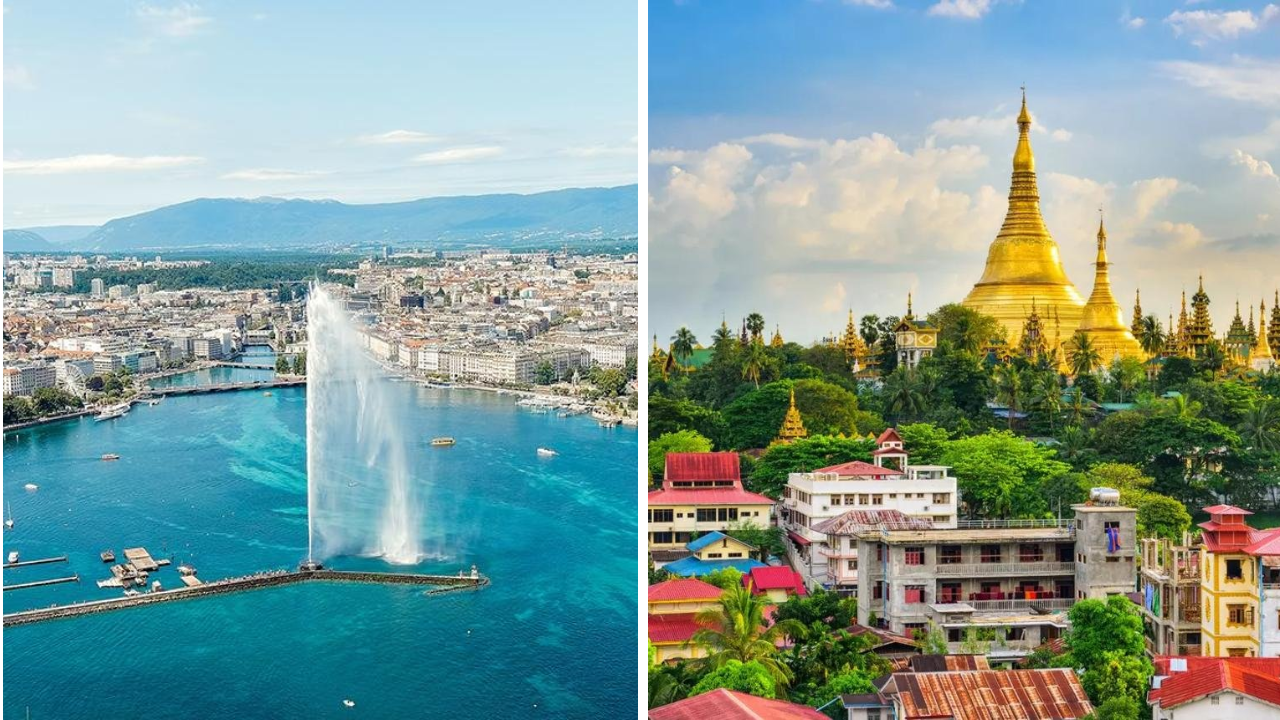
Some cities are so famous, influential, or important that people naturally assume they must be their country’s capital. But in many cases, the actual capital is a smaller or less internationally recognized city, often chosen for historical or political reasons. Here are 27 cities everyone mistakenly assumes are capitals.
Sydney, Australia

Sydney is Australia’s most famous city, so plenty of people assume it’s the capital. But that title belongs to Canberra, which was selected as a compromise between rival cities Sydney and Melbourne. Canberra officially became the seat of government in 1927.
Istanbul, Turkey

Istanbul served as the capital of the Byzantine and Ottoman empires, so the confusion is understandable. However, Ankara became Turkey’s capital in 1923, shortly before the republic was proclaimed. Istanbul remains the country’s largest city and its biggest cultural and commercial center.
New York City, United States

New York is America’s most internationally recognizable city, and it actually served as the country’s first capital under the U.S. Constitution. George Washington was inaugurated there in 1789. The capital eventually moved to Washington, D.C., in 1800.
Rio de Janeiro, Brazil

Rio was Brazil’s capital for nearly two centuries, which helps explain why people still associate it with the country’s government. In 1960, the capital moved to the purpose-built city of Brasília. The move was intended partly to encourage development farther inland.
Toronto, Canada

Toronto is Canada’s largest city and a major financial center, but Ottawa is the national capital. Queen Victoria selected Ottawa in 1857, partly because of its location between English-speaking and French-speaking Canada. Toronto is actually the capital of Ontario.
Mumbai, India

Mumbai is India’s financial capital, home to Bollywood, and one of the world’s largest urban economies. But the country’s political capital is New Delhi. Mumbai does serve as the capital of the Maharashtra state, which sometimes adds to the confusion.
Shanghai, China

Shanghai’s skyscrapers and enormous economic influence make it look like the obvious capital of China. However, Beijing has been the capital of the People’s Republic of China since its founding in 1949. Shanghai remains the country’s leading financial and commercial hub.
Dubai, United Arab Emirates

Dubai is famous for the Burj Khalifa, luxury tourism, and enormous international investment. Despite its global reputation, the UAE’s capital is Abu Dhabi. Dubai is the capital of its own emirate, while Abu Dhabi houses the country’s federal government.
Lagos, Nigeria

Lagos was Nigeria’s capital until 1991, when the government officially moved to Abuja. The new capital was chosen for its more central location and to reduce pressure on overcrowded Lagos. Lagos remains Nigeria’s largest economic center and one of Africa’s biggest cities.
Johannesburg, South Africa

Johannesburg is South Africa’s largest city and its financial powerhouse, but it isn’t one of the country’s three capitals. Pretoria is the administrative capital, Cape Town is the legislative capital, and Bloemfontein is traditionally recognized as the judicial capital. South Africa’s arrangement is unusually complicated.
Casablanca, Morocco

Casablanca is Morocco’s largest city and the center of its banking and business industries. Its international fame, helped along by the classic Humphrey Bogart movie, often overshadows Rabat, the actual capital. Rabat has served as Morocco’s capital since 1912.
Zurich, Switzerland

Zurich is Switzerland’s largest city and one of Europe’s most important financial centers. But Bern is the country’s federal city and serves as its de facto capital. Switzerland technically doesn’t designate an official capital in its constitution, making this one a little more complicated.
Amsterdam, Netherlands

Amsterdam is officially the capital of the Netherlands, but there’s a catch. The Dutch government, parliament, and most foreign embassies are based in The Hague. It’s a classic case of a city being the constitutional capital without functioning as the main seat of government.
Auckland, New Zealand

Auckland is New Zealand’s largest city and its main international gateway. It even served as the country’s capital until 1865, when the government moved to Wellington. Wellington was considered more centrally located between the North and South Islands.
Karachi, Pakistan

Karachi was Pakistan’s first capital after independence in 1947. The government began relocating its capital functions to Rawalpindi in 1959 while Islamabad was being developed. Islamabad eventually became the permanent capital, although Karachi remains Pakistan’s largest city and financial center.
Ho Chi Minh City, Vietnam

Ho Chi Minh City, formerly Saigon, was the capital of South Vietnam until the country’s reunification in 1976. Today, Hanoi is the capital of unified Vietnam. Ho Chi Minh City remains the country’s largest economic center and one of Southeast Asia’s busiest cities.
Yangon, Myanmar

Yangon was Myanmar’s capital for decades before the military government relocated the capital to Naypyidaw in 2005. The new city was built inland and features enormous government complexes and unusually wide roads. Yangon remains Myanmar’s largest city and commercial center.
Almaty, Kazakhstan

Almaty was Kazakhstan’s capital until 1997, when the government moved to Astana, which was then called Akmola. The relocation was partly driven by geographic and political considerations. Almaty remains the country’s largest city and its leading financial and cultural center.
Tel Aviv, Israel

Tel Aviv is Israel’s biggest international business center, and many people associate it with the country’s diplomatic presence. Israel considers Jerusalem its capital, although Jerusalem’s status remains internationally disputed. Some countries maintain their embassies in Tel Aviv because of that dispute.
Geneva, Switzerland

Geneva hosts the United Nations’ European headquarters, the World Health Organization, and numerous international organizations. With so much diplomacy happening there, it’s easy to mistake it for Switzerland’s capital. That role belongs to Bern, the country’s federal city.
Dar es Salaam, Tanzania

Dar es Salaam was Tanzania’s capital until the country designated Dodoma as its new capital in 1973. The relocation took decades, and many government functions remained in Dar es Salaam for years. Dodoma is now the political capital, while Dar es Salaam remains the country’s biggest city and commercial center.
Abidjan, Ivory Coast

Abidjan was Ivory Coast’s capital until 1983, when the government designated Yamoussoukro as the new capital. Abidjan remains the country’s economic powerhouse, and many diplomatic and government activities still take place there. Yamoussoukro is famous for its enormous Basilica of Our Lady of Peace.
Medellín, Colombia

Medellín has become internationally famous for its urban transformation, public transport system, and cultural scene. But Colombia’s capital is Bogotá, which is also the country’s largest city. Medellín is the capital of the Antioquia department, not the nation.
Alexandria, Egypt

Alexandria was one of the ancient world’s greatest cities and served as Egypt’s capital under the Ptolemaic dynasty. It was famous for its legendary lighthouse and library. Modern Egypt’s capital is Cairo, which has held that role since the city’s foundation in the 10th century.
Thessaloniki, Greece

Thessaloniki is Greece’s second-largest city and was once a major center of the Byzantine Empire. Its long history and importance in northern Greece sometimes make it seem like a possible capital. Athens, however, has been the capital of modern Greece since 1834.
Bujumbura, Burundi

Bujumbura served as Burundi’s capital for decades before the government designated Gitega as the political capital in 2019. Bujumbura remains the country’s largest city and economic center, and some government functions have continued there during the transition.
Frankfurt, Germany

Frankfurt is Germany’s financial capital and home to the European Central Bank. It nearly became the capital of West Germany after World War II, but Bonn was ultimately chosen in 1949. Following reunification, Berlin became the seat of the German federal government.